Month: July 2025

  • Requiem for a Dream Movie Poster: A Masterclass in Visual Storytelling and Film Marketing

    Requiem for a Dream Movie Poster: A Masterclass in Visual Storytelling and Film Marketing

    Key Takeaways:

    • The requiem for a dream movie poster is a striking example of how visual design can encapsulate a film’s core themes—addiction, despair, and psychological unraveling.
    • Its use of a bloodshot eye, somber character portraits, and a bold color palette creates a haunting, memorable image that resonates with audiences and collectors.
    • The poster’s symbolism, composition, and marketing strategy have made it an iconic piece in the world of psychological drama movie posters and a case study for effective film marketing design.

    Introduction

    What makes a movie poster truly unforgettable? For many cinephiles and marketers, the requiem for a dream movie poster stands as a benchmark in the art of film promotion. Directed by Darren Aronofsky, Requiem for a Dream is a psychological drama that delves deep into the harrowing world of addiction, shattered dreams, and the human psyche. But before audiences even step into the theater or press play, it’s the movie poster that sets the tone—offering a visual prelude to the film’s emotional journey.

    This post takes an in-depth look at the requiem for a dream movie poster: its design elements, symbolism, and the marketing impact that has helped cement the film’s cult status. We’ll explore why this poster is not just a piece of promotional material, but a work of art that continues to influence film marketing and business branding today.

    Background of Requiem for a Dream

    Released in 2000, Requiem for a Dream is a psychological drama directed by Darren Aronofsky and based on the novel by Hubert Selby Jr. The film follows four characters—Sara Goldfarb (Ellen Burstyn), her son Harry (Jared Leto), his girlfriend Marion (Jennifer Connelly), and his friend Tyrone (Marlon Wayans)—as they spiral into addiction, each chasing their own version of happiness and fulfillment.

    The film is renowned for its unflinching portrayal of addiction’s destructive power, innovative editing, and haunting score. It received critical acclaim, with Ellen Burstyn earning an Academy Award nomination for Best Actress. Over the years, Requiem for a Dream has achieved cult status, and its movie poster has become a visual shorthand for the film’s intense emotional landscape and cultural significance .

    Visual Analysis of the Movie Poster

    The Bloodshot, Dilated Eye

    The most arresting feature of the requiem for a dream movie poster is the close-up of a bloodshot, dilated eye. This image dominates the upper half of the poster, immediately drawing the viewer’s attention. The eye is a powerful symbol—representing not only the altered states induced by drug use but also the idea of perception, surveillance, and the inescapable gaze of addiction .

    Character Portraits: Dazed and Melancholic

    Beneath the eye, the poster features the four main characters, their faces arranged in a row. Each character’s expression is distant, melancholic, and dazed, visually conveying the despair and hopelessness that pervade the film. Their positioning and lack of direct eye contact with the viewer suggest isolation and internal conflict, reinforcing the film’s psychological themes .

    Color Scheme: Black, White, and Red

    The color palette is both vibrant and somber. The use of black and white creates a stark, almost clinical atmosphere, while the deep red in the title and director’s credits signals danger, passion, and the death of dreams. This contrast between color and content mirrors the film’s exploration of drug-induced euphoria versus harsh reality .

    Typography: Bold and Symbolic

    The title “Requiem for a Dream” is rendered in a bold, capitalized font, with the word “dream” highlighted in red. This typographic choice emphasizes the central theme of lost hope and the unattainable nature of the characters’ aspirations. The font’s size and placement ensure that the title is the focal point, anchoring the poster’s composition .

    Composition and Layout

    The poster’s layout is clean and balanced, with the eye and character portraits separated by the film’s title. The actors’ names are positioned at the top—a classic star marketing technique that leverages the cast’s recognition to attract viewers. The use of negative space around the eye and faces heightens the sense of psychological tension and draws the viewer deeper into the poster’s narrative .

    Haunting Atmosphere

    Overall, the poster creates an uneasy, haunting atmosphere. The dominance of the eye, the somber faces, and the stark color scheme work together to evoke a sense of dread and inevitability, perfectly aligning with the film’s mood and narrative .

    Symbolism and Thematic Representation

    Addiction, Mental Deterioration, and Lost Hope

    The requiem for a dream movie poster does more than advertise the film—it visually represents its core themes. The bloodshot eye is a metaphor for the characters’ altered perceptions and the invasive, all-consuming nature of addiction. It also serves as a “window into the soul,” suggesting that the true horror of addiction lies within .

    The Eye as a Metaphor

    In film theory, the eye often symbolizes awareness, perception, and vulnerability. Here, it also hints at surveillance and the inability to escape one’s own reality. The eye’s prominence on the poster suggests that the characters are constantly watched—by themselves, by society, and by the forces of addiction .

    Dissonance and Internal Conflict

    The contrast between the characters’ distant expressions and the invasive eye creates a visual dissonance, highlighting the internal conflict and psychological fragmentation experienced by each character. This tension is further reinforced by the poster’s color palette, which juxtaposes the allure of drug-induced escapism with the bleakness of addiction .

    Typography and Contrast

    The use of bold, contrasting typography reinforces the film’s dark themes. The red “dream” stands out against the black and white background, symbolizing the fleeting nature of hope and the ultimate futility of the characters’ pursuits .

    Marketing and Business Impact of the Poster

    Attracting the Target Audience

    The requiem for a dream movie poster is a masterclass in film marketing design. Its striking imagery and emotional resonance immediately attract viewers interested in psychological thrillers and addiction dramas. By visually encapsulating the film’s tone, the poster appeals to both the intellect and emotions of its target audience .

    Building Brand Identity

    The poster’s design elements—eye motif, color scheme, bold typography—have become synonymous with the film, contributing to a strong brand identity. This visual branding extends beyond the poster, influencing trailers, DVD covers, and other promotional materials .

    Star Marketing and Credibility

    Featuring the names of the main cast and director at the top of the poster is a strategic move. It leverages the star power of Ellen Burstyn, Jared Leto, Jennifer Connelly, and Marlon Wayans, as well as Darren Aronofsky’s reputation, to build trust and credibility with potential viewers .

    Collectors and Memorabilia

    The poster’s iconic status has made it a sought-after item among collectors and film enthusiasts. High-quality prints, art paper, and canvas versions are available for purchase, turning the poster into a business product that extends the film’s revenue stream .

    Influence on Film Marketing Strategies

    The success of the requiem for a dream movie poster has influenced the design of subsequent psychological drama movie posters. Its emphasis on symbolism, emotional impact, and visual storytelling has set a standard for how films in this genre are marketed today .

    Comparison with Other Movie Posters

    When compared to other psychological drama movie posters, the requiem for a dream movie poster stands out for its minimalist yet emotionally charged design. Posters for films like Black Swan and Shutter Island also use strong visual metaphors—cracked faces, ominous landscapes—to convey psychological tension .

    However, the Requiem poster’s use of the eye as a central motif is particularly effective in symbolizing the film’s focus on perception and internal struggle. While other posters may rely on more literal imagery, Requiem opts for abstraction, inviting viewers to interpret its meaning and engage with the film on a deeper level .

    This approach has become a trend in movie poster design for social dramas, where the goal is to evoke curiosity and emotional response rather than simply depict scenes from the film.

    Tips for Designing an Effective Movie Poster (Business Blog Angle)

    1. Symbolism and Visual Storytelling

    Draw inspiration from the requiem for a dream movie poster by using symbols that encapsulate your film’s core themes. Visual metaphors—like the eye—can communicate complex ideas succinctly and powerfully .

    2. Color Psychology

    Choose a color palette that reflects the mood and genre of your film. Dark, subdued colors can evoke tension and introspection, while bold accents (like red) can highlight key themes or emotions .

    3. Typography and Readability

    Select fonts that are both legible and reflective of your film’s tone. Use contrast to make important words or titles stand out, as seen with the red “dream” in the Requiem poster .

    4. Emotional Connection

    Aim to create an immediate emotional impact. The best posters, like Requiem for a Dream, resonate with viewers on a visceral level, drawing them into the film’s world .

    5. Star Marketing and Credibility

    Leverage the names of well-known actors or directors to build trust and attract attention. Position these elements strategically within the poster’s layout .

    6. Balance Aesthetic Appeal with Marketing Strategy

    Ensure that your poster is not only visually striking but also serves its primary function as a marketing tool. It should entice viewers, communicate the film’s essence, and support broader promotional campaigns .

    Where to Find or Buy the Requiem for a Dream Movie Poster

    Collectors and fans can purchase original or high-quality prints of the requiem for a dream movie poster from several reputable sources:

    • Amazon: Offers a variety of sizes and styles, including authentic and lithographic prints.
    • eBay: Features both new and vintage posters, with options for different budgets.
    • MoviePosters.com: Specializes in original and vintage movie posters.
    • Starstills.com: Provides a wide selection of original and reprint posters.
    • Posteritati Movie Poster Gallery: Located in New York, this gallery offers an extensive archive of original posters.
    • Redbubble: Features unique, artist-designed posters for those seeking something more creative .

    Options include art paper, canvas prints, and framed versions, catering to both casual fans and serious collectors.

    Conclusion

    The requiem for a dream movie poster is more than just a piece of promotional art—it’s a visual distillation of the film’s haunting exploration of addiction, despair, and the fragility of dreams. Through its bold imagery, symbolic use of color, and evocative composition, the poster captures the essence of Darren Aronofsky’s vision and sets a high bar for psychological drama movie posters.

    For business owners, marketers, and film enthusiasts, the poster offers valuable lessons in the power of visual storytelling and strategic branding. Its enduring appeal, both as a marketing tool and a collectible, underscores the importance of thoughtful design in the world of film promotion.

    Whether you’re a designer seeking inspiration, a collector hunting for iconic memorabilia, or simply a fan of great cinema, the requiem for a dream movie poster stands as a testament to the lasting impact of artful marketing. Explore more about film marketing, appreciate the artistry behind your favorite posters, and let the power of visual storytelling inspire your next project.


  • What Does Requiem for a Dream Mean? A Deep Dive into the Film’s Title, Symbolism, and Enduring Message

    What Does Requiem for a Dream Mean? A Deep Dive into the Film’s Title, Symbolism, and Enduring Message

    Key Takeaways:

    • The phrase “what does Requiem for a Dream mean” encompasses both a literal and symbolic lament for lost hopes, using the structure of a requiem (a mass for the dead) to mourn the destruction of dreams.
    • Darren Aronofsky’s film explores addiction, self-deception, and the pursuit of unattainable ideals, using innovative cinematic techniques to immerse viewers in the characters’ psychological decline.
    • The film’s ending and visual motifs reinforce its cautionary message about the dangers of obsession, escapism, and the cost of living for illusions.
    • Requiem for a Dream remains relevant for contemporary audiences, offering a powerful reflection on addiction, mental health, and the fragility of human aspirations.

    Introduction

    What does Requiem for a Dream mean? This haunting question lingers long after the credits roll on Darren Aronofsky’s acclaimed film, which has captivated and unsettled audiences since its release. Based on Hubert Selby Jr.’s novel, Requiem for a Dream is more than a story about addiction—it’s a meditation on the death of dreams, the seductive power of illusion, and the devastating consequences of chasing happiness through self-destruction.

    Understanding the deeper meaning behind the film’s title and narrative is essential for grasping its emotional and cultural impact. In this comprehensive exploration, we’ll break down the literal and symbolic significance of “requiem,” analyze the film’s themes and cinematic techniques, and discuss why Requiem for a Dream continues to resonate with viewers today. If you’ve ever wondered, “what does Requiem for a Dream mean?”—this is your definitive guide.

    1. Background and Overview of Requiem for a Dream

    Requiem for a Dream follows four interconnected characters in Brooklyn: Sara Goldfarb, her son Harry, his girlfriend Marion, and his friend Tyrone. Each is ensnared by addiction—Sara to amphetamines and television, the others to heroin. Their stories unfold in parallel, tracing a descent from hope to despair as their dreams are consumed by obsession and dependency .

    Director Darren Aronofsky’s vision was to create a film that immerses viewers in the psychological states of its characters, using innovative editing, sound, and visual storytelling. The film’s critical reception was polarized: praised for its boldness and performances (especially Ellen Burstyn’s Oscar-nominated turn as Sara), but also criticized for its unflinching, sometimes overwhelming depiction of addiction .

    Despite controversy, Requiem for a Dream has become a cultural touchstone—a film that challenges, provokes, and endures.

    2. The Literal Meaning of “Requiem for a Dream”

    What Is a Requiem?

    A “requiem” is a mass or musical composition for the dead, rooted in the Latin word for “rest.” In religious and secular contexts, a requiem is a ritual of mourning, remembrance, and reflection .

    What Is the “Dream”?

    In the film, “dream” refers to the hopes, aspirations, and illusions that drive the characters: Sara’s fantasy of TV stardom, Harry and Marion’s plans for a better life, Tyrone’s longing for respect and belonging. These dreams are deeply personal, yet tragically universal.

    The Title’s Interpretation

    So, what does Requiem for a Dream mean? Literally, it’s a funeral song for lost dreams—a lament for the hopes that are destroyed by addiction, self-delusion, and the harsh realities of life. The title sets the stage for a story that is as much about mourning ideals as it is about mourning lives .

    3. Symbolism Behind the Title

    Mourning Death and Lost Aspirations

    The dual meaning of the title is central: it’s a requiem not just for physical death, but for the death of possibility, innocence, and hope. Each character’s journey is a gradual funeral for their own dreams, culminating in a collective lament.

    Setting the Tone

    From the opening frames, the title signals that this is not a story of redemption, but of loss. The requiem is both a warning and a ritual, preparing the audience for the emotional and psychological toll of the narrative.

    Ritual and Psychological States

    The structure of a requiem—a formal, communal act of mourning—mirrors the characters’ psychological states. As their dreams die, they retreat into rituals of denial, fantasy, and self-destruction, unable to confront the reality of their losses .

    4. Themes Explored in Requiem for a Dream

    Addiction as Self-Destruction and Escape

    The film is a study in addiction—not just to substances, but to fantasies and ideals. Sara’s amphetamine use is driven by her obsession with television and societal beauty standards. Harry, Marion, and Tyrone use heroin to escape pain and chase fleeting happiness .

    Analysis of Addictions

    • Sara: Addicted to diet pills and the fantasy of TV fame.
    • Harry & Marion: Addicted to heroin and the dream of opening a clothing store.
    • Tyrone: Addicted to heroin and the hope of escaping his circumstances.

    From Dreams to Despair

    The narrative traces the progression from hope to despair, as each character’s pursuit of happiness leads to physical and mental decay. Their dreams become destructive illusions, blinding them to reality until it’s too late .

    Illusions vs. Reality

    The film explores how dreams, when untethered from reality, become dangerous. The characters’ inability to distinguish between what is possible and what is fantasy accelerates their downfall.

    Connection vs. Isolation

    Addiction intensifies the characters’ isolation, even as they long for connection. Their relationships deteriorate, leaving them alone with their obsessions.

    The Cost of Addiction

    Ultimately, the film is a meditation on the cost of addiction—not just to the self, but to relationships, dignity, and hope.

    5. Interpretation of the Film’s Ending

    The Fate of the Characters

    The film’s ending is a devastating tableau: Sara is institutionalized, Harry loses his arm, Marion is sexually exploited, and Tyrone is imprisoned. Each is left in a fetal position, symbolizing vulnerability, regression, and the utter collapse of their dreams .

    The Recurring Dream Sequence

    The recurring image of Harry and Marion on the pier is a visual motif for lost innocence and unreachable happiness. In the end, this dream is revealed as an illusion—forever out of reach.

    Visual and Narrative Representation

    The darkness and despair that overtake the characters are mirrored in the film’s visuals: cold lighting, rapid cuts, and a haunting score. The final shots reinforce the sense of mourning, as each character curls into themselves, defeated by the weight of their lost dreams.

    The Meaning of the Final Shots

    The fetal positions are a powerful metaphor for vulnerability, helplessness, and the desire to return to a state of safety that no longer exists. It’s a visual requiem for their dreams and for the selves they have lost .

    6. Psychological and Emotional Depth

    Self-Deception and Fantasy

    The film is a masterclass in psychological realism, showing how self-deception and fantasy can be as addictive as any drug. Each character constructs elaborate illusions to avoid confronting pain, only to be destroyed by the very dreams they cherish .

    Emotional Isolation

    Despite their longing for connection, the characters are trapped in emotional isolation. The film’s use of split screens and parallel editing underscores their inability to truly reach one another.

    Longing for Escape

    The desire to escape—whether through drugs, television, or dreams—is universal. The film’s power lies in its ability to make the audience feel the seductive pull of these escapes, even as it exposes their dangers.

    7. Broader Interpretations Beyond Drug Addiction

    Metaphor for Human Struggles

    Requiem for a Dream is not just about drug addiction; it’s a metaphor for the broader human struggle with obsession, idealism, and the pursuit of unattainable goals. The film’s cautionary message extends to anyone who has ever chased a dream at the expense of reality .

    Addiction to Ideals

    Sara’s subplot is especially poignant: her addiction is not to drugs, but to the ideal of beauty, acceptance, and television fame. The film critiques a culture that equates worth with appearance and success.

    Dangers of Immediate Gratification

    The film warns against the dangers of living for immediate gratification, showing how the pursuit of quick fixes leads to long-term destruction.

    8. Cinematic Techniques that Enhance the Meaning

    Split Screens and Disconnection

    Aronofsky’s use of split screens visually represents the characters’ disconnection, even in moments of apparent intimacy. This technique reinforces the illusion of closeness and the reality of isolation .

    Soundtrack and Editing Rhythm

    Clint Mansell’s score, with its repetitive, haunting motifs, builds a sense of desperation and inevitability. The rapid editing and montage sequences mirror the characters’ psychological fragmentation .

    Metaphorical Visuals

    Visual motifs—like Harry’s infected arm—serve as physical manifestations of addiction’s toll. The cyclical imagery of drug use, television, and fantasy underscores the inescapable nature of the characters’ traps .

    9. Critical Reception of the Meaning

    Scholarly and Critical Analysis

    Film scholars and critics have praised Requiem for a Dream for its unflinching realism and thematic depth. The film is often cited as a powerful critique of the American Dream and a cautionary tale about the dangers of unchecked desire .

    Challenging Addiction Narratives

    Unlike many addiction stories that offer hope or redemption, Requiem for a Dream presents a bleak, realistic ending. This choice has sparked debate but also cemented the film’s reputation as a cultural artifact about addiction and lost dreams .

    Cultural Impact

    The film’s impact extends beyond cinema, influencing discussions about addiction, mental health, and the societal pressures that drive individuals to self-destruction.

    10. What Requiem for a Dream Means for Today’s Audiences

    Contemporary Relevance

    In an era marked by addiction crises, mental health struggles, and the relentless pursuit of success, Requiem for a Dream remains deeply relevant. Its exploration of the human condition, the cost of dreams, and the dangers of escapism speaks to audiences across generations .

    Lessons Learned

    The film teaches hard lessons about the importance of self-awareness, the dangers of denial, and the need for empathy toward those struggling with addiction. It challenges viewers to reflect on their own dreams and the ways in which they pursue them.

    Encouragement for Empathy

    By immersing viewers in the psychological and emotional realities of its characters, the film fosters empathy and awareness—reminding us that behind every addiction is a person longing for connection and meaning.

    Conclusion

    So, what does Requiem for a Dream mean? It is a requiem—a lament, a funeral song—for the dreams that drive us, the illusions that comfort us, and the obsessions that can destroy us. Through its innovative storytelling, psychological depth, and unflinching honesty, Darren Aronofsky’s film offers a powerful meditation on the fragility of hope and the dangers of living for illusions.

    The connection between the title, the story, and the film’s emotional resonance is clear: Requiem for a Dream is not just about addiction, but about the universal human experience of longing, loss, and the search for meaning. Its cautionary message endures, urging us to confront our own dreams with honesty and compassion—and to remember that some dreams, once lost, can never be reclaimed.


  • Requiem for a Dream Nude Scenes: Artistic Purpose, Controversy, and Cultural Impact

    Requiem for a Dream Nude Scenes: Artistic Purpose, Controversy, and Cultural Impact

    Key Takeaways:

    • The Requiem for a Dream nude scenes are central to the film’s raw depiction of addiction, vulnerability, and psychological decline.
    • Director Darren Aronofsky uses nudity not for eroticism, but as a visual metaphor for loss of agency, degradation, and emotional fragmentation.
    • These scenes have sparked controversy, critical debate, and academic analysis, but are widely recognized for their artistic and narrative significance.
    • The film’s explicit content led to an NC-17 rating and censorship issues, highlighting ongoing debates about art, ethics, and cinematic boundaries.

    Introduction

    What makes the Requiem for a Dream nude scenes so unforgettable—and so controversial? Darren Aronofsky’s 2000 cult psychological drama is renowned for its unflinching portrayal of addiction and despair, using graphic imagery, including nudity, to immerse viewers in the characters’ downward spirals. Unlike typical Hollywood fare, these scenes are not designed to titillate, but to confront audiences with the raw, uncomfortable realities of vulnerability, exploitation, and loss of control.

    In this in-depth analysis, we’ll explore the context, artistic intent, critical reception, and cultural impact of the Requiem for a Dream nude scenes. We’ll break down how Aronofsky’s visual style, narrative choices, and ethical considerations combine to make these moments some of the most powerful—and debated—in modern cinema.

    1. Contextual Background of Requiem for a Dream

    Requiem for a Dream follows four characters—Sara Goldfarb, her son Harry, his girlfriend Marion Silver, and his friend Tyrone C. Love—as they each pursue their own dreams, only to be consumed by addiction. The film’s narrative is a relentless descent into psychological and physical ruin, with nudity woven into the story as a symbol of vulnerability and degradation.

    The nude scenes primarily involve Marion (Jennifer Connelly) and Harry (Jared Leto), whose relationship is both passionate and tragic, as well as Marion’s later involvement in transactional sex. These moments are not isolated; they are integral to the film’s depiction of how addiction strips away dignity and self-worth.

    2. Description of Notable Nude Scenes in Requiem for a Dream

    The film features several explicit scenes that have become infamous for their intensity and emotional impact:

    • Marion and Harry’s Love Scene:
      Early in the film, Marion and Harry share an intimate moment, depicted with full nudity. Aronofsky uses split screens and close-ups to show both tenderness and emotional distance, subverting expectations of eroticism.
    • Marion’s Sex-for-Drugs Scene:
      In the film’s harrowing climax, Marion participates in a sex act involving a sex toy and multiple women, in exchange for drugs. The scene is shot with harsh lighting and fragmented editing, emphasizing humiliation and loss of agency rather than titillation.
    • Desperation and Loss of Control:
      Other scenes, such as a woman running nude toward a partner, are presented in a context of desperation, not sensuality. The nudity is often accompanied by visible distress, further distancing these moments from typical Hollywood glamour.

    Parental guides note the presence of visible pubic hair, graphic sexual content, and a level of explicitness rarely seen in mainstream cinema. The film’s nude scenes are starkly different from those that emphasize beauty or eroticism; here, nudity is a tool for storytelling and emotional truth.

    3. Artistic Intent and Director’s Perspective on the Nude Scenes

    Darren Aronofsky’s approach to nudity is rooted in realism and emotional honesty. He has openly criticized the “low-risk version of pornography” found in many movie sex scenes, aiming instead to depict sex and nudity as uncomfortable, unvarnished realities. His use of split screens and close-ups in the love scene between Harry and Marion visually separates the characters, even in their most intimate moments, highlighting their emotional isolation .

    Aronofsky spent hours filming naked body parts, carefully selecting shots that best conveyed the characters’ psychological states. His goal was to challenge cinematic norms, showing both tenderness and despair, and to immerse the audience in the characters’ subjective experiences .

    Key Finding:
    Aronofsky’s nude scenes are intentionally anti-erotic, designed to provoke empathy and discomfort rather than arousal.

    4. Thematic Importance of Nude Scenes in the Film

    Nudity in Requiem for a Dream is a visual metaphor for vulnerability, exposure, and the raw human condition amid addiction. The nude scenes complement the film’s central themes:

    • Desperation and Loss of Control:
      Characters are often naked at their lowest points, symbolizing the stripping away of defenses and the erosion of personal boundaries.
    • Degradation and Exploitation:
      Marion’s transactional sex scene is a powerful commentary on the commodification of the body and the erasure of agency in the pursuit of drugs.
    • Contrast Between Expectation and Reality:
      The film subverts the expectation of eroticism, presenting sex as a means of survival or exploitation, not pleasure.
    • Psychological Horror:
      Nudity enhances the film’s psychological horror, making the audience confront the characters’ suffering in a visceral way.

    5. Audience and Critical Reactions to the Nude Scenes

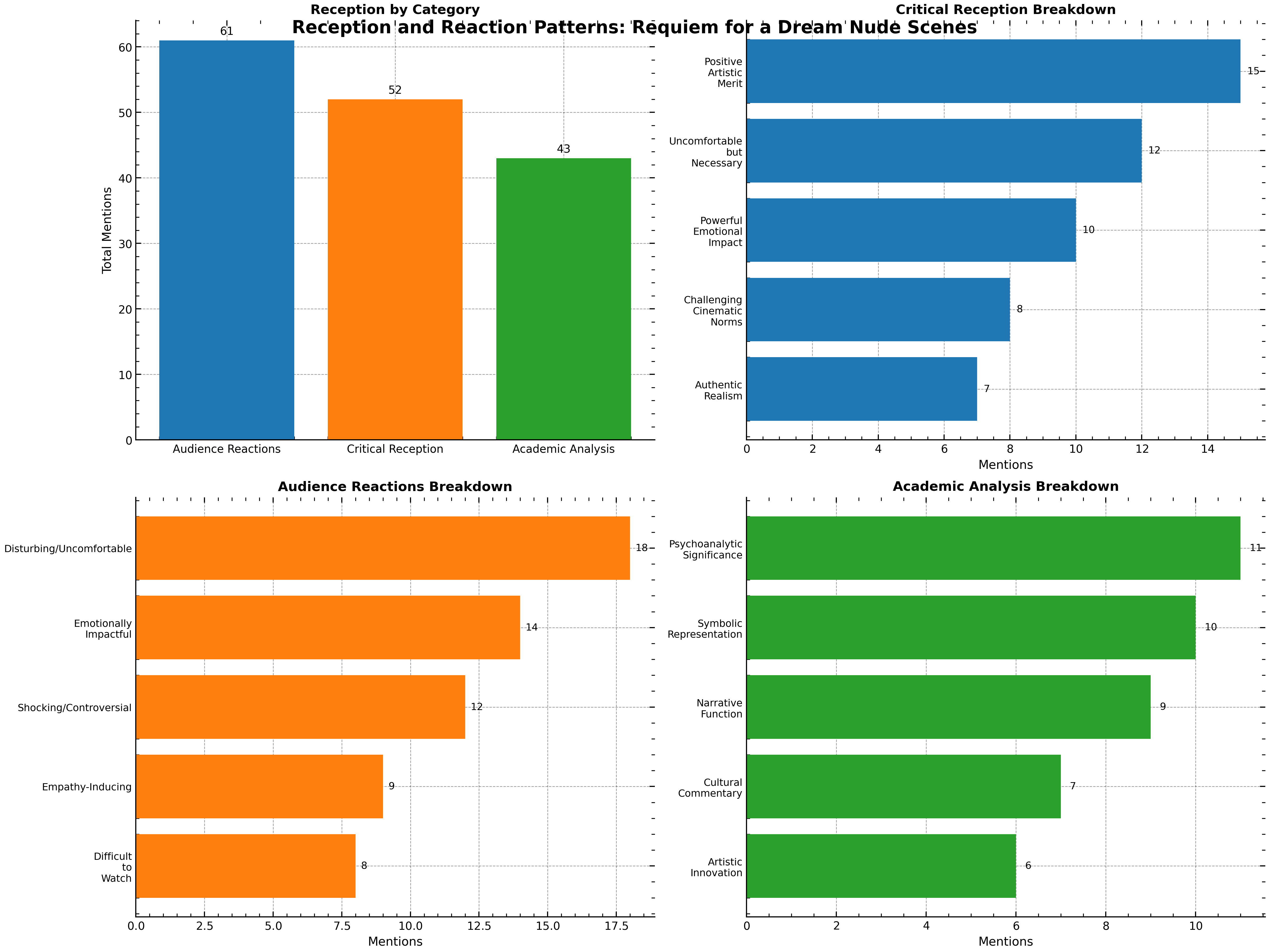
    Reception of the Requiem for a Dream nude scenes is marked by intense emotional responses:

    • Audience Reactions:
      Most viewers describe the scenes as disturbing, uncomfortable, and emotionally impactful. Many find them difficult to watch, but recognize their importance in conveying the film’s message.
    • Critical Reception:
      Critics praise the artistic merit and emotional power of the nude scenes, noting their role in challenging cinematic norms and provoking empathy. Some debate whether the explicitness is necessary, but there is broad consensus that the scenes are integral to the film’s narrative.
    • Academic Analysis:
      Scholars highlight the psychoanalytic significance, symbolic representation, and narrative function of the nude scenes, viewing them as essential to the film’s exploration of identity, desire, and loss.

    fig Figure: Reception and reaction patterns for Requiem for a Dream nude scenes. Audience reactions (orange) are most documented, with ‘Disturbing/Uncomfortable’ leading responses. Critics emphasize artistic merit and emotional impact.
    6. Impact on Film Rating and Censorship

    The explicit nature of the Requiem for a Dream nude scenes led to significant controversy:

    • NC-17 Rating:
      The MPAA assigned the film an NC-17 rating due to its graphic sexual content, particularly the climactic sex-for-drugs scene .
    • Unrated Release:
      Rather than editing the film, Aronofsky and the studio chose to release it unrated in most theaters, preserving the director’s vision but limiting its distribution.
    • R-Rated Version:
      An edited version was created for home video, trimming the most explicit scenes to comply with R-rating standards. However, most critics and cinephiles consider the uncut version definitive.
    • Censorship Debate:
      The film’s rating history sparked broader discussions about artistic freedom, commercial pressures, and the boundaries of explicit content in American cinema.
    Version Rating Key Differences Distribution Context
    Director’s Cut/Unrated Unrated Contains all original explicit sexual content and nudity Theatrical release (most venues), home video (limited)
    R-Rated/Edited R Cuts or trims explicit sexual scenes, especially the “ass to ass” sequence Home video (Blockbuster, TV), some theaters

    7. Psychological and Psychoanalytic Interpretations of Nude Scenes

    Academic and psychoanalytic interpretations emphasize the symbolic and psychological significance of nudity in the film:

    • Fragmented Identity:
      The nude scenes represent the characters’ psychological unraveling, with physical exposure mirroring mental breakdowns .
    • Lacanian and Freudian Readings:
      Scholars link nudity to concepts of lack, desire, and trauma, viewing the exposure of the body as a signifier of unfulfilled longing and existential despair .
    • Vulnerability and Loss of Control:
      Nakedness signals both mental and physical breakdowns, stripping away defenses and exposing raw humanity .
    • Feminine Suffering and Exploitation:
      Marion’s scenes are analyzed as depictions of feminine suffering and the commodification of the body, aligning with psychoanalytic discussions of desire and loss .

    8. Visual Style and Cinematic Techniques Highlighting Nude Scenes

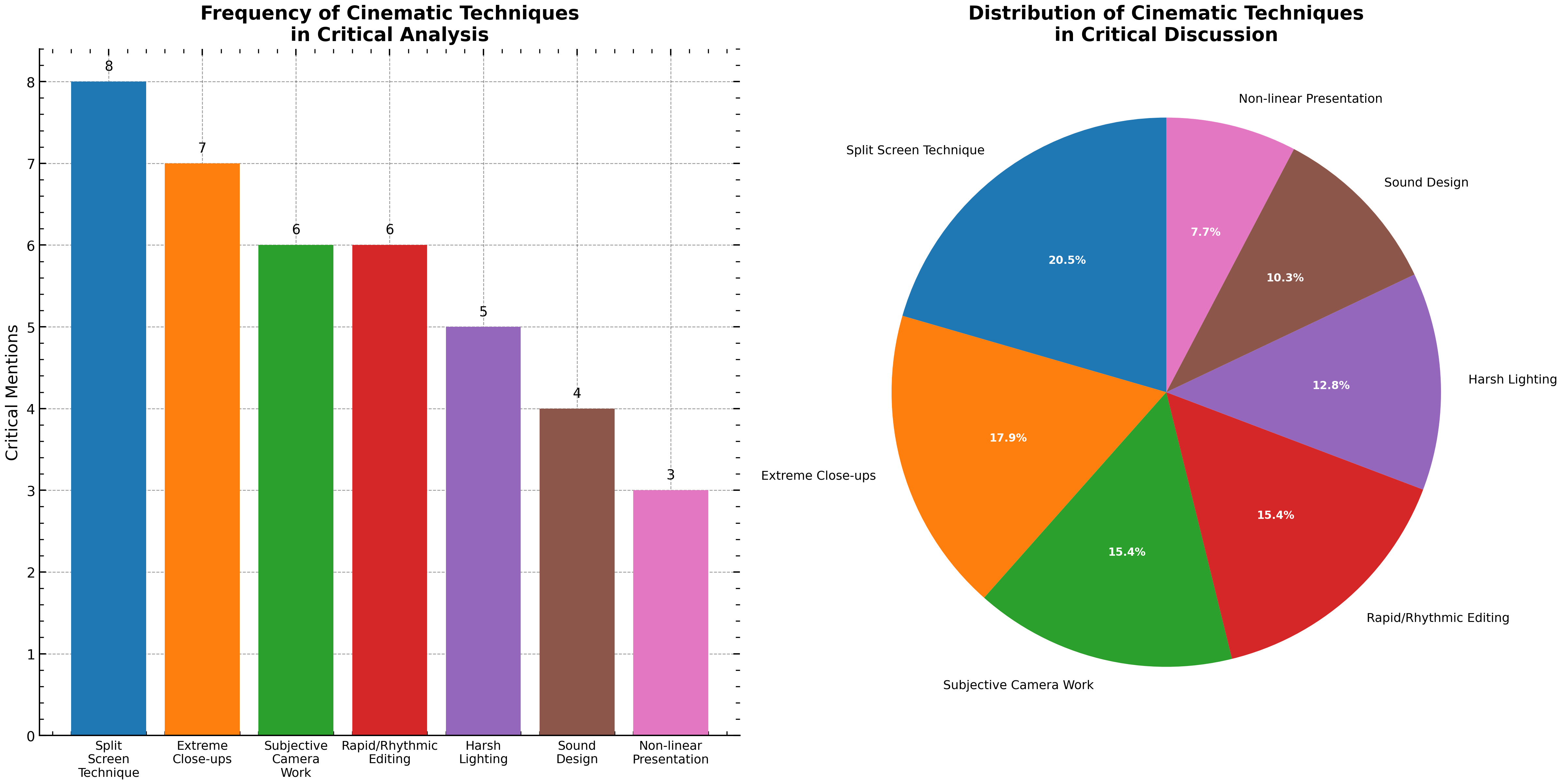
    Aronofsky’s signature visual style intensifies the impact of the nude scenes:

    • Split Screen Technique:
      Used to emphasize emotional disconnection, especially in intimate moments.
    • Extreme Close-Ups:
      Heighten vulnerability and subjectivity, focusing on tactile sensations and emotional states.
    • Subjective Camera Work:
      Conveys psychological immersion and disorientation.
    • Rapid/Rhythmic Editing:
      Mirrors mental fragmentation and prevents erotic consumption.
    • Harsh Lighting:
      Reinforces rawness and discomfort, rejecting glamour.
    • Sound Design:
      Creates immersive discomfort with amplified, jarring audio.

    fig Figure: Frequency and distribution of cinematic techniques in critical analysis of Requiem for a Dream nude scenes. Split screen and close-ups are most discussed.
    9. Ethical and Cultural Considerations

    The film’s nude scenes raise important ethical and cultural questions:

    • Actor Consent and Artistic Responsibility:
      Aronofsky’s approach emphasized authenticity and respect for the actors, with clear communication and support during filming.
    • Exploitation and Trauma:
      The depiction of nudity in contexts of exploitation and trauma has sparked debate about the ethics of such portrayals, especially regarding the risk of re-traumatization or objectification.
    • Cultural Sensitivity:
      The film’s graphic content challenges cultural norms around nudity, sex work, and addiction, provoking societal dialogue about human dignity and the realities of suffering.

    10. Conclusion

    The Requiem for a Dream nude scenes are far more than moments of shock or controversy—they are essential to the film’s artistic and thematic power. Through innovative visual techniques, psychological depth, and uncompromising honesty, Darren Aronofsky uses nudity to expose the vulnerability, degradation, and existential despair at the heart of addiction. These scenes challenge viewers to confront uncomfortable truths, sparking debate and reflection about the role of explicit content in cinema.

    Key Takeaway:
    The Requiem for a Dream nude scenes remain some of the most powerful, challenging depictions of human vulnerability in modern film, serving as a testament to the potential of cinema to provoke empathy, discomfort, and critical thought.

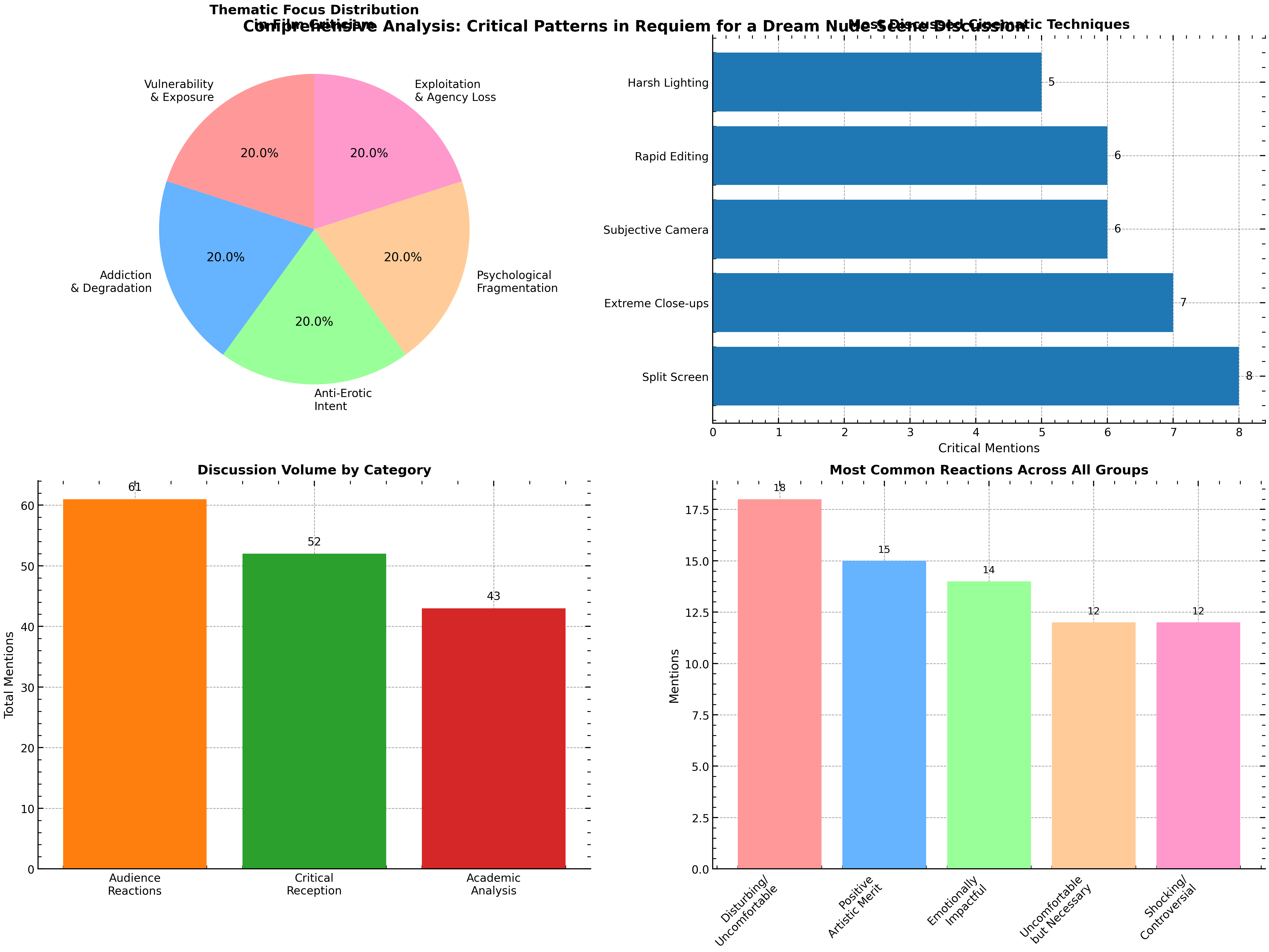
    Visual Summary: Critical Patterns in Requiem for a Dream Nude Scene Analysis

    fig Figure: Comprehensive analysis of critical themes, technical approaches, and reception patterns in discussions of Requiem for a Dream nude scenes. Artistic merit, emotional impact, and psychological significance dominate critical and audience responses.

  • What Is the Movie Requiem for a Dream About? An In-Depth Exploration of Its Plot, Themes, and Impact

    What Is the Movie Requiem for a Dream About? An In-Depth Exploration of Its Plot, Themes, and Impact

    Key Takeaways:

    • Requiem for a Dream is a psychological drama that explores the devastating effects of addiction on four interconnected characters.
    • The film uses innovative cinematic techniques and a haunting score to immerse viewers in the characters’ psychological descent.
    • Its themes of addiction, shattered dreams, and isolation remain deeply relevant in today’s society.
    • The movie is both critically acclaimed and culturally significant, with performances—especially Ellen Burstyn’s—receiving widespread recognition.

    Introduction

    What is the movie Requiem for a Dream about, and why does it continue to haunt audiences more than two decades after its release? Directed by Darren Aronofsky and released in 2000, Requiem for a Dream has become a cult classic in the psychological drama genre. Its unflinching portrayal of addiction, innovative visual style, and emotionally charged performances have made it a touchstone for film lovers, critics, and anyone interested in the darker side of the human experience.

    In this comprehensive article, we’ll answer the question: What is the movie Requiem for a Dream about? We’ll break down the film’s plot, analyze its main characters, explore its central themes, and discuss its lasting impact on cinema and society. Whether you’re a first-time viewer or a longtime fan, this guide will help you understand why Requiem for a Dream remains one of the most powerful and important films of its era.

    1. Overview of Requiem for a Dream

    At its core, Requiem for a Dream is a story about dreams, addiction, and the human desire for connection and fulfillment. The film follows four main characters living in Brooklyn, New York:

    • Sara Goldfarb: A lonely widow obsessed with the idea of appearing on television.
    • Harry Goldfarb: Sara’s son, a heroin addict with dreams of a better life.
    • Marion Silver: Harry’s girlfriend, an aspiring fashion designer.
    • Tyrone C. Love: Harry’s best friend, who also struggles with heroin addiction.

    The movie is based on the 1978 novel of the same name by Hubert Selby Jr., and it weaves together the characters’ stories as they each pursue their own version of happiness—only to be consumed by their addictions .

    Requiem for a Dream Poster

    2. Detailed Plot Summary

    So, what is the movie Requiem for a Dream about in terms of its plot? The film is structured in three acts—Summer, Fall, and Winter—mirroring the characters’ descent from hope to devastation.

    Sara’s Storyline

    Sara Goldfarb, played by Ellen Burstyn, is a widow who spends her days watching television in her small apartment. When she receives a phone call (possibly a scam) inviting her to appear on a TV game show, she becomes obsessed with losing weight to fit into her favorite red dress. She visits a doctor who prescribes amphetamines and diet pills, leading to a rapid and dangerous addiction. As her dependency grows, Sara’s mental health deteriorates, and she begins to experience vivid hallucinations—most notably, her refrigerator coming to life and attacking her. Eventually, Sara is hospitalized and subjected to electroconvulsive therapy, leaving her a shell of her former self .

    Harry, Marion, and Tyrone’s Storyline

    Harry Goldfarb (Jared Leto), his girlfriend Marion Silver (Jennifer Connelly), and his best friend Tyrone C. Love (Marlon Wayans) are all heroin addicts. They dream of making a big drug deal to fund their ambitions—Harry and Marion hope to open a clothing store, while Tyrone wants to escape his troubled past. Initially, their plan seems to work, but as their addiction deepens, everything unravels.

    • Harry’s health declines due to repeated drug use, leading to a severe infection in his arm.
    • Marion’s relationship with Harry deteriorates, and she turns to prostitution to support her habit.
    • Tyrone is arrested and, unable to get drugs in jail, suffers through withdrawal and racial abuse.

    The Descent into Addiction

    As the seasons change from Summer to Winter, each character’s situation worsens. The film’s climax is a montage of tragedy: Sara is institutionalized, Harry’s arm is amputated, Marion is exploited, and Tyrone is left alone in prison. The final images show all four characters curled into fetal positions, symbolizing their complete regression and the death of their dreams .

    3. Themes Explored in the Movie

    Addiction and Its Destructive Effects

    At its heart, Requiem for a Dream is a film about addiction—not just to drugs, but to dreams, love, and validation. Each character’s pursuit of happiness through external means leads to their downfall. The movie’s unflinching depiction of physical and psychological deterioration is both shocking and deeply moving .

    The Pursuit of Dreams and Self-Destruction

    The title itself is a lament for lost dreams. The characters’ aspirations—Sara’s TV appearance, Harry and Marion’s business, Tyrone’s escape—are all ultimately destroyed by their dependencies. The film critiques the illusion of the American Dream and the dangers of chasing unattainable goals .

    Loneliness and Isolation

    Loneliness is a recurring theme, especially in Sara’s storyline. Her addiction is fueled by her desire for connection and recognition, but it only leads to further isolation. The other characters, too, become increasingly cut off from each other as their addictions worsen .

    The Illusion of Hope vs. Harsh Reality

    The film contrasts the characters’ hopeful fantasies with the brutal reality of their lives. Their dreams are systematically dismantled, leaving only despair and regret.

    Socioeconomic Commentary

    Set in Brooklyn, the film also comments on the socioeconomic factors that contribute to addiction—poverty, lack of opportunity, and systemic neglect. Tyrone’s experiences, in particular, highlight issues of race and class within the drug culture of New York .

    4. Character Analysis and Their Arcs

    Sara Goldfarb: The Tragic Dreamer

    Sara’s arc is perhaps the most heartbreaking. Her obsession with fame and her desperate attempts to lose weight lead her into a spiral of amphetamine-induced psychosis. Ellen Burstyn’s performance captures the vulnerability and tragedy of a woman destroyed by her own dreams .

    Ellen Burstyn as Sara Goldfarb

    Harry Goldfarb: The Desperate Addict

    Harry is a classic tragic figure—full of hope but unable to escape his addiction. His relationship with Marion is both a source of comfort and a catalyst for his downfall. Jared Leto’s portrayal is raw and intense, capturing the desperation and decline of his character .

    Jared Leto as Harry Goldfarb

    Marion Silver: Dreams vs. Survival

    Marion’s journey is one of lost potential. An aspiring designer, she is ultimately forced to compromise her dignity to support her addiction. Her arc is a powerful commentary on the struggle between dreams and survival .

    Tyrone C. Love: Searching for Escape

    Tyrone’s story highlights the intersection of addiction, race, and systemic challenges. His longing for escape and approval is thwarted by his circumstances, leading to a tragic end in prison .

    5. Cinematic Techniques and Artistic Approach

    Aronofsky’s Directing Style

    Darren Aronofsky employs a range of innovative techniques to immerse viewers in the characters’ experiences:

    • Quick Cuts and Split Screens: The film’s rapid editing and use of split screens create a sense of chaos and fragmentation, mirroring the characters’ psychological states .
    • Intense Pacing: The relentless pace of the film reflects the compulsive nature of addiction.

    The Haunting Musical Score

    Clint Mansell’s score, especially the iconic “Lux Aeterna,” is integral to the film’s emotional impact. The music’s repetitive, escalating motifs underscore the characters’ obsessions and the inevitability of their downfall .

    Visual Symbolism

    • The Red Dress: Symbolizes Sara’s longing for youth and acceptance.
    • Refrigerator Hallucination: Represents Sara’s growing paranoia and loss of control.
    • The Infected Arm: A graphic symbol of Harry’s physical decline and the consequences of addiction.

    Editing Style

    The film’s editing—marked by jump cuts, time-lapse sequences, and visual montages—depicts the passage of time and the intensification of addiction. These techniques make the viewer feel the characters’ compulsions and the relentless march toward tragedy .

    6. Impact and Reception of the Film

    Critical Reception

    Requiem for a Dream received widespread acclaim for its unflinching portrayal of addiction and its innovative style. Critics praised the film’s emotional intensity and the performances of its cast, particularly Ellen Burstyn, who was nominated for an Academy Award for Best Actress .

    Cultural Impact

    The film has become a reference point in discussions about addiction, mental health, and the darker side of the American Dream. Its raw depiction of substance abuse has sparked conversations in educational, clinical, and cultural settings .

    Awards and Recognition

    In addition to Burstyn’s Oscar nomination, the film received numerous accolades for its direction, editing, and score. It is frequently cited in lists of the most powerful and disturbing films ever made .

    Why It’s a Difficult but Important Film

    Many viewers find Requiem for a Dream hard to watch due to its graphic content and emotional intensity. However, its honesty and artistry make it an essential film for anyone interested in the realities of addiction and the power of cinema to provoke empathy and understanding .

    7. Why Requiem for a Dream Matters Today

    Relevance of Its Themes

    The film’s exploration of addiction, mental health, and the pursuit of unattainable dreams remains deeply relevant in today’s society. With the ongoing opioid epidemic and increasing awareness of mental health issues, Requiem for a Dream serves as a stark reminder of the consequences of neglect and the need for compassion .

    Insights into the Opioid Epidemic and Mental Health

    The characters’ struggles mirror the real-life challenges faced by millions dealing with substance abuse and mental illness. The film’s portrayal of addiction as a disease, rather than a moral failing, aligns with contemporary understandings and the push for better treatment and support .

    Reflection on Hope, Dreams, and the Dangers of Addiction

    Ultimately, the film is a meditation on the fragility of hope and the dangers of seeking fulfillment through external means. It challenges viewers to reflect on their own dreams and the societal pressures that shape them.

    Conclusion

    So, what is the movie Requiem for a Dream about? It is a stark, emotional exploration of addiction, shattered dreams, and the human longing for connection and meaning. Through its unforgettable characters, innovative style, and unflinching honesty, the film forces viewers to confront the darkest corners of the human experience.

    Requiem for a Dream is not an easy film to watch, but it is an important one. It invites us to empathize with those who struggle, to question the illusions we chase, and to recognize the urgent need for compassion and understanding in a world that too often looks away.

    If you’ve seen the film, what was your interpretation? How did it affect you? Share your thoughts in the comments below and join the conversation about one of cinema’s most powerful works.


  • Movie Requiem for a Dream: Plot, Themes, and Lasting Legacy

    Movie Requiem for a Dream: Plot, Themes, and Lasting Legacy


    Key Takeaways:

    • Movie Requiem for a Dream is a landmark in psychological drama, renowned for its raw depiction of addiction and innovative cinematic style.
    • The film’s narrative, visual metaphors, and haunting score have left a profound impact on cinema and pop culture.
    • Its exploration of dreams, despair, and the human cost of addiction continues to resonate with audiences and critics alike.

    Introduction

    What makes the movie Requiem for a Dream so unforgettable, so haunting, and so frequently discussed decades after its release? Darren Aronofsky’s 2000 film is not just a story about drugs—it’s a visceral journey into the heart of human longing, obsession, and the devastating consequences of chasing unattainable dreams. From its innovative editing to its iconic score, movie Requiem for a Dream has become a touchstone in both cinema and pop culture, sparking conversations about addiction, mental health, and the darker side of the American dream.

    In this comprehensive guide, we’ll explore the plot, production, themes, characters, and enduring legacy of movie Requiem for a Dream. Whether you’re a first-time viewer or a longtime fan, this deep dive will help you appreciate why this film remains a cult classic and a powerful cautionary tale.

    Background and Production

    Darren Aronofsky’s Vision

    Darren Aronofsky, known for his bold and often controversial filmmaking, brought a unique vision to movie Requiem for a Dream. After the success of his debut film Pi, Aronofsky set out to adapt Hubert Selby Jr.’s 1978 novel, drawn to its poetic brutality and unflinching look at addiction .

    Adapting Selby’s Novel

    Aronofsky collaborated closely with Selby, ensuring the screenplay retained the novel’s raw emotional core. The adaptation process was challenging, with Aronofsky determined to cast younger actors to heighten the story’s impact, despite initial resistance from producers .

    Casting and Production Details

    The film features a powerhouse cast:

    • Ellen Burstyn as Sara Goldfarb, whose performance earned her an Academy Award nomination.
    • Jared Leto as Harry Goldfarb, Sara’s son.
    • Jennifer Connelly as Marion Silver, Harry’s girlfriend.
    • Marlon Wayans as Tyrone C. Love, Harry’s best friend.

    Filmed primarily in Coney Island, Brooklyn, the production faced budget constraints but overcame them with creative solutions, resulting in a visually and emotionally impactful film .

    Music and Editing

    Clint Mansell’s haunting score, performed by the Kronos Quartet, is integral to the film’s mood. The iconic track “Lux Aeterna” has become synonymous with cinematic intensity. Aronofsky’s use of rapid editing, split screens, and “hip-hop montage” sequences immerses viewers in the characters’ psychological states, making the experience both disorienting and unforgettable .

    Detailed Plot Summary

    Four Intertwined Lives

    Movie Requiem for a Dream follows four main characters, each with their own dreams and demons:

    Sara Goldfarb

    A lonely widow, Sara becomes obsessed with the idea of appearing on a television game show. Her desire to fit into a red dress from her youth leads her to take amphetamines, prescribed as diet pills. As her addiction grows, Sara’s grip on reality slips, culminating in terrifying hallucinations and eventual institutionalization .

    Harry Goldfarb

    Sara’s son, Harry, dreams of a better life with his girlfriend Marion. He and his friend Tyrone start dealing heroin to fund their ambitions. However, their drug use spirals out of control, leading to failed deals, mounting desperation, and Harry’s eventual hospitalization and amputation due to infection .

    Marion Silver

    Marion, an aspiring fashion designer, is initially motivated by love and ambition. As her addiction deepens, she becomes increasingly dependent on Harry and heroin. When money runs out, she turns to prostitution to support her habit, sacrificing her dignity and dreams .

    Tyrone C. Love

    Tyrone seeks escape from his troubled past and hopes for a better future. Despite his efforts, he is caught in the cycle of addiction and systemic racism, ending up in prison and suffering withdrawal alone .

    Key Plot Points

    • The film is structured in three acts—Summer, Fall, and Winter—mirroring the characters’ descent from hope to devastation.
    • Sara’s mental health deteriorates as her addiction to diet pills intensifies, leading to vivid hallucinations involving her television and refrigerator.
    • Harry, Marion, and Tyrone’s drug-dealing venture collapses as their consumption increases and profits dwindle.
    • The climax sees each character at their lowest: Sara is institutionalized, Harry loses his arm, Marion is exploited, and Tyrone is imprisoned.
    • The film ends with each character curled into a fetal position, symbolizing defeat and the death of their dreams .

    Themes and Symbolism

    Addiction and Its Toll

    The central theme of movie Requiem for a Dream is addiction—not just to substances, but to dreams, validation, and escape. The film portrays addiction as a force that consumes both body and soul, leading to isolation, degradation, and despair .

    Dreams vs. Reality

    Each character’s dream—be it fame, love, or escape—is ultimately an illusion. The film’s title itself is a lament for lost dreams, with the narrative serving as a requiem for the hopes that once gave the characters’ lives meaning .

    Loneliness and Validation

    Sara’s obsession with television and her red dress symbolizes her longing for connection and acceptance. The television becomes a metaphor for the illusory nature of her dreams and the destructive power of media .

    Social Commentary

    The film critiques societal pressures, from body image to the pursuit of the American dream. It exposes the dangers of chasing quick fixes and the neglect of mental health, offering a scathing commentary on the culture of instant gratification .

    Symbolic Imagery

    • Red Dress: Represents Sara’s lost youth and desire for acceptance.
    • Television Game Show: Symbolizes the unattainable dream of recognition.
    • Refrigerator: Becomes a menacing presence, embodying Sara’s growing addiction.
    • Split Screens and Fast Cuts: Visual metaphors for the characters’ isolation and the repetitive cycle of addiction .

    Critical Reception and Cultural Impact

    Initial Reception

    Upon release, movie Requiem for a Dream received critical acclaim for its unflinching portrayal of addiction and its innovative style. Ellen Burstyn’s performance was particularly lauded, earning her an Academy Award nomination .

    Cult Classic Status

    The film’s raw emotional power and unique visual approach have made it a cult classic. It is frequently cited in discussions about addiction, mental health, and the darker aspects of the human experience .

    Influence on Cinema

    Aronofsky’s techniques—rapid editing, split screens, and a haunting score—have influenced countless filmmakers. The film’s impact extends to pop culture, with references in music, television, and even memes .

    Enduring Relevance

    Movie Requiem for a Dream remains a touchstone in discussions about addiction, serving as both a cautionary tale and a work of art that challenges viewers to confront uncomfortable truths .

    Cinematic Techniques and Style

    Editing and Visuals

    Aronofsky’s use of split screens, fast cuts, and montage sequences creates a sense of urgency and chaos, mirroring the characters’ psychological states. The “hip-hop montage” style, with rapid shots of drug use, immerses viewers in the compulsive nature of addiction .

    Music Score

    Clint Mansell’s score, especially “Lux Aeterna,” is integral to the film’s mood. The music’s relentless build heightens tension and underscores the characters’ escalating desperation .

    Color Palette

    The film’s visuals shift from bright, saturated colors during drug-induced highs to dull, muted tones in moments of despair, emphasizing the artificiality of the characters’ escapes .

    Editing Innovations

    The innovative editing not only enhances storytelling but also sets a new standard for depicting psychological states in cinema .

    Lessons and Reflections

    What Audiences Can Learn

    Movie Requiem for a Dream offers a stark lesson about the dangers of addiction and the human cost of chasing dreams through destructive means. It encourages empathy for those struggling with addiction and challenges viewers to reflect on the societal pressures that drive people to self-destruction .

    The Human Cost

    The film’s unflinching portrayal of suffering serves as a warning about the consequences of unchecked desire and the importance of compassion in addressing addiction .

    Encouraging Awareness

    By immersing viewers in the characters’ experiences, the film fosters a deeper understanding of addiction’s complexity and the need for empathy and support .

    Conclusion

    Movie Requiem for a Dream is more than just a film about drugs—it’s a powerful exploration of dreams, despair, and the human condition. Its innovative style, unforgettable performances, and profound themes have secured its place as a landmark in modern cinema. Whether you’re watching for the first time or revisiting it with fresh eyes, the film’s message remains urgent and relevant: beware the seductive pull of dreams that can never be fulfilled, and remember the real cost of chasing illusions.

    If you’ve seen movie Requiem for a Dream, share your thoughts, experiences, or questions in the comments below. Let’s continue the conversation about this unforgettable film and its impact on our understanding of addiction and hope.

  • Requiem for a Dream Director: Darren Aronofsky’s Vision, Style, and Legacy

    Requiem for a Dream Director: Darren Aronofsky’s Vision, Style, and Legacy

    Key Takeaways:

    • Darren Aronofsky, the requiem for a dream director, is renowned for his bold visual style, psychological intensity, and innovative storytelling.
    • “Requiem for a Dream” set new standards for cinematic depictions of addiction, influencing filmmakers and pop culture for decades.
    • Aronofsky’s collaborations with key creatives, especially cinematographer Matthew Libatique and composer Clint Mansell, are central to his films’ impact.
    • The director’s methods, while sometimes controversial, have redefined independent cinema and psychological drama.

    Introduction

    What makes a film so unforgettable that it lingers in the mind for decades? For many, the answer is “Requiem for a Dream,” a movie that redefined the boundaries of psychological drama and visual storytelling. But behind this cinematic landmark stands a singular creative force: Darren Aronofsky, the requiem for a dream director. In this post, we explore everything about the requiem for a dream director—Darren Aronofsky—his background, filmmaking style, creative partnerships, and the enduring legacy of his work.

    From his Brooklyn roots to his rise as one of the most influential directors of his generation, Aronofsky’s journey is as compelling as the films he creates. Whether you’re a film buff, a student, or simply curious about the mind behind “Requiem for a Dream,” this deep dive will illuminate the artistry, challenges, and impact of a true visionary.

    I. Who Is the Requiem for a Dream Director?

    A. Darren Aronofsky: Quick Facts

    • Full Name: Darren S. Aronofsky
    • Birthdate: February 12, 1969
    • Notable Works: “Pi” (1998), “Requiem for a Dream” (2000), “The Fountain” (2006), “The Wrestler” (2008), “Black Swan” (2010), “Noah” (2014), “Mother!” (2017), “The Whale” (2022)

    B. Early Life & Education

    Growing up in Brooklyn, New York, Aronofsky was immersed in the arts from a young age. His parents, both public school teachers, encouraged his creative pursuits, taking him to Broadway shows and classic films. He attended Harvard University, majoring in social anthropology and filmmaking, and later earned an MFA in directing from the American Film Institute Conservatory. These experiences shaped his unique blend of intellectual rigor and artistic daring.

    C. Breakout Into Filmmaking

    Aronofsky’s debut feature, “Pi,” was a low-budget psychological thriller that won the Best Director award at Sundance and established him as a bold new voice in independent cinema. He soon founded Protozoa Pictures, his production company, and set his sights on adapting Hubert Selby Jr.’s “Requiem for a Dream”.

    II. The Making of “Requiem for a Dream”

    A. Adapting Hubert Selby Jr.’s Novel

    Aronofsky discovered Selby’s novel while at Harvard and was struck by its raw depiction of addiction and longing. He collaborated closely with Selby on the screenplay, blending the author’s poetic language with his own vision and updating the setting to Brooklyn. This partnership ensured the film’s emotional honesty and authenticity.

    B. Major Production Challenges

    Securing funding was a major hurdle. Despite the success of “Pi,” studios were wary of the film’s dark subject matter. Artisan Entertainment eventually backed the project, but a last-minute budget cut forced tough decisions. Casting was equally challenging, requiring actors willing to embrace the film’s harrowing demands. Ellen Burstyn, Jared Leto, Jennifer Connelly, and Marlon Wayans all delivered career-defining performances.

    C. Collaboration with Key Creative Partners

    • Director of Photography: Matthew Libatique, Aronofsky’s frequent collaborator, crafted the film’s distinctive look.
    • Composer: Clint Mansell’s haunting score, especially “Lux Aeterna,” became iconic.
    • Editor: Jay Rabinowitz’s rapid-fire editing and innovative montages simulated the experience of addiction and psychological fragmentation.

    III. Darren Aronofsky’s Directing Style in “Requiem for a Dream”

    A. Visual Storytelling Techniques

    Aronofsky’s style is instantly recognizable. He uses split-screen, time-lapse, and extreme close-ups to immerse viewers in his characters’ experiences. The “hip-hop montage”—a rapid sequence of close-ups and sound effects—compresses complex actions into seconds, simulating the compulsive nature of addiction. The SnorriCam, a camera rig attached to the actor, creates a disorienting, subjective perspective during moments of distress.

    Darren Aronofsky and Matthew Libatique on set Darren Aronofsky (left) with cinematographer Matthew Libatique, a key collaborator on “Requiem for a Dream”

    B. Sound & Music as Narrative Tools

    Clint Mansell’s score, performed by the Kronos Quartet, is integral to the film’s emotional power. “Lux Aeterna” recurs throughout, acting as a leitmotif for hope and despair. The sound design blends realistic and surreal elements, making everyday noises—like a refrigerator’s growl—psychologically charged.

    C. Editing Innovations

    Aronofsky and Rabinowitz’s editing is central to the film’s impact. Quick cuts, jump cuts, and rhythmic montages mirror the characters’ psychological states. The pacing alternates between frenetic and languid, heightening tension and emotional response.

    D. Emotional Impact & Audience Reception

    The film’s style is designed to be emotionally overwhelming. Critics and audiences have praised its innovation and intensity, though some have criticized it for being “style over substance.” Ellen Burstyn’s performance, in particular, was universally lauded, earning her an Oscar nomination.

    IV. “Requiem for a Dream” in Darren Aronofsky’s Career

    A. Aftermath & Critical Legacy

    “Requiem for a Dream” premiered at Cannes to a standing ovation and has since become a modern classic. It is frequently cited in discussions of addiction, psychological realism, and the darker side of the American Dream. The film’s reputation has only grown, with many critics and audiences regarding it as one of the most powerful explorations of addiction and despair in film history.

    B. Connections to Later Films

    Aronofsky’s later works—“The Fountain,” “Black Swan,” “The Wrestler,” “Mother!,” and “The Whale”—all explore themes of obsession, transformation, and psychological struggle. “Requiem for a Dream” established the template for his mature directorial voice, blending visual innovation with emotional intensity.

    Darren Aronofsky at Odesa International Film Festival Darren Aronofsky, requiem for a dream director, at OIFF 2015

    V. Impact of the Director’s Vision: Legacy & Controversy

    A. Cultural Legacy

    Aronofsky’s direction has influenced a generation of filmmakers. “Requiem for a Dream” is often listed among the most disturbing yet influential films ever made, setting new standards for visual storytelling and psychological drama.

    B. How Aronofsky’s Methods Changed Filmmaking

    The film’s use of music and editing as narrative tools has been widely imitated. Aronofsky’s willingness to tackle taboo subjects and push stylistic boundaries helped redefine independent cinema.

    C. Criticism and Controversy

    Some critics have accused Aronofsky of “style over substance” or excessive bleakness. He has responded by emphasizing the importance of emotional truth and the need to confront uncomfortable realities through art.

    VI. Frequently Asked Questions about the “Requiem for a Dream” Director

    What inspired Darren Aronofsky to make “Requiem for a Dream”?
    Aronofsky was deeply moved by Hubert Selby Jr.’s novel and wanted to capture its raw emotional power on screen.

    How does Aronofsky prepare actors for such intense roles?
    He fosters a collaborative environment, encouraging actors to explore their characters’ psychological depths and often involving them in the creative process.

    What are Aronofsky’s trademarks as a director?
    Signature techniques include extreme close-ups, split screens, hip-hop montage editing, and immersive sound design.

    How does the director view the film’s grim ending?
    Aronofsky sees it as a necessary reflection of the characters’ realities—a cautionary tale about the dangers of addiction and the loss of dreams.

    Where can you watch interviews with Darren Aronofsky?
    Interviews are available on platforms like YouTube, film festival archives, and DVD/Blu-ray extras.

    Did the director ever explain the meaning of specific scenes?
    Aronofsky often discusses his intentions in interviews, emphasizing the importance of viewer interpretation and emotional resonance.

    VII. The Director and His Collaborators: Building a Vision

    A. Key Collaborators on “Requiem for a Dream”

    • Matthew Libatique (Cinematographer): Crafted the film’s visual language; has worked with Aronofsky on six films.
    • Clint Mansell (Composer): Created the iconic score; collaborated on four films.
    • Jay Rabinowitz (Editor): Shaped the film’s innovative editing style.

    B. Reuniting with Talent in Future Films

    Aronofsky frequently works with the same creative team, fostering a sense of trust and shared vision. Actors like Jennifer Connelly and crew members like Libatique and Mansell have appeared in multiple projects.

    VIII. Requiem for a Dream Director: Industry Recognition

    A. Major Awards & Nominations

    Award/Festival Category Result Year
    Academy Awards Best Actress (Ellen Burstyn) Nominated 2001
    Independent Spirit Awards Best Director (Darren Aronofsky) Nominated 2001
    Cannes Film Festival Official Selection 2000
    Boston Society of Film Critics Best Actress (Ellen Burstyn) Won 2000

    Aronofsky’s direction and the film’s technical achievements have been recognized by critics and industry peers alike.

    B. Lasting Impact on Independent Cinema

    “Requiem for a Dream” helped redefine what was possible in indie filmmaking, inspiring directors to take creative risks and tackle challenging subjects.

    IX. Fun Facts & Lesser-Known Stories

    • The “hip-hop montage” editing style was pioneered by Aronofsky and has since become a staple in psychological drama.
    • The film’s budget was cut by $1 million just weeks before shooting, forcing creative solutions.
    • Ellen Burstyn initially hesitated to take the role, questioning who would want to see such a bleak story—her performance is now considered legendary.
    • The SnorriCam, used for disorienting shots, was custom-built for the film.

    X. Final Thoughts on Darren Aronofsky’s Mastery

    Darren Aronofsky’s direction makes “Requiem for a Dream” an enduring masterpiece. His willingness to push boundaries, innovate visually, and explore the darkest corners of the human psyche has left an indelible mark on cinema. Even 25 years later, the film’s influence, brilliance, and controversy continue to spark discussion and inspire new generations of filmmakers.

    Aronofsky at the press conference for Black Swan Darren Aronofsky, requiem for a dream director, at the “Black Swan” press conference
    Call to Action & Reader Engagement

    What are your thoughts on the requiem for a dream director? Share your favorite scenes, Aronofsky moments, or questions in the comments below! Join the conversation on social media and follow for more in-depth filmmaker studies.


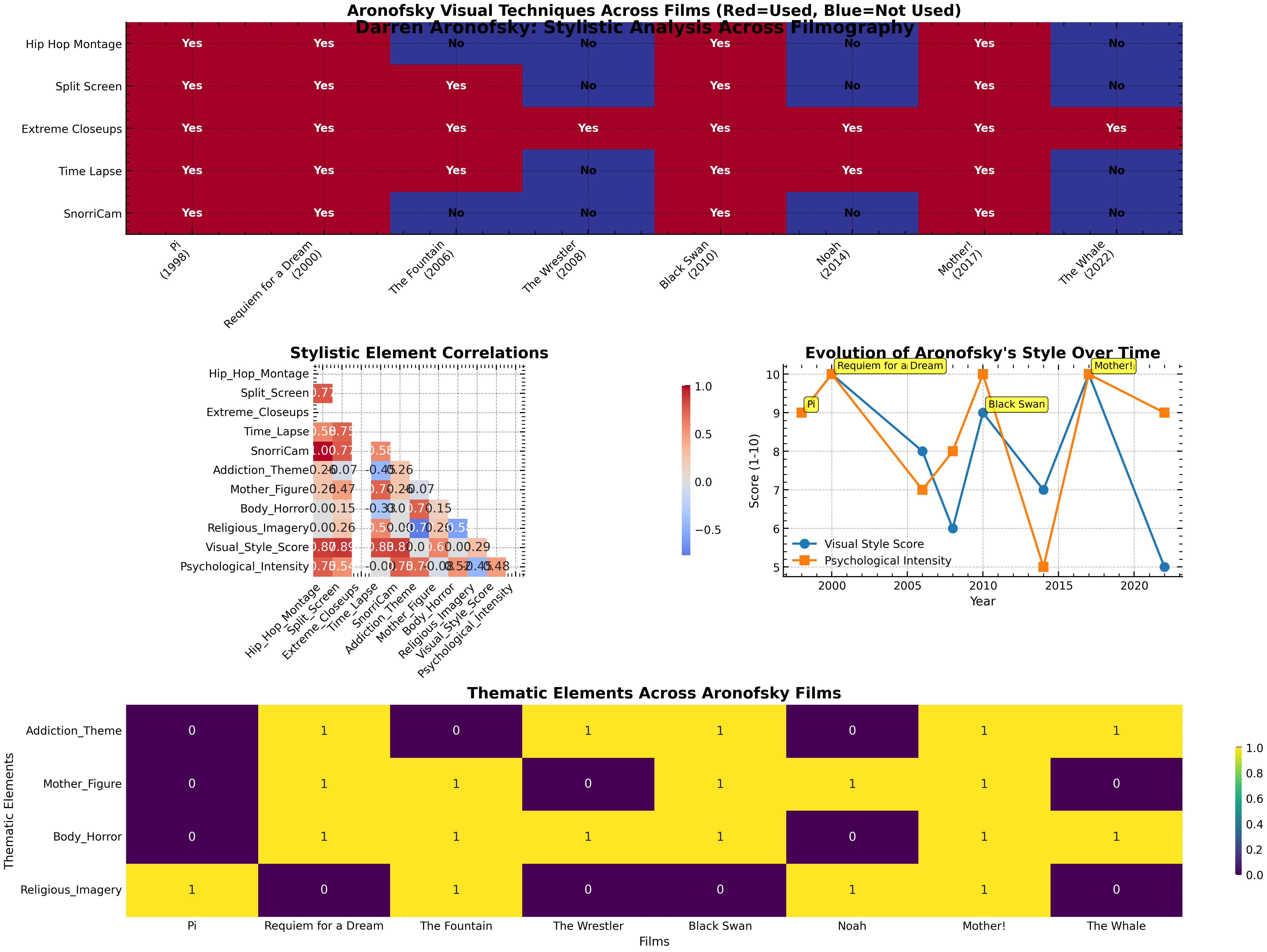
    Visualizing Aronofsky’s Signature Style

    fig Figure: Frequency of Aronofsky’s signature visual techniques across his filmography. “Requiem for a Dream” stands out for its use of all major techniques—extreme close-ups, split screens, hip-hop montage, time-lapse, and SnorriCam.
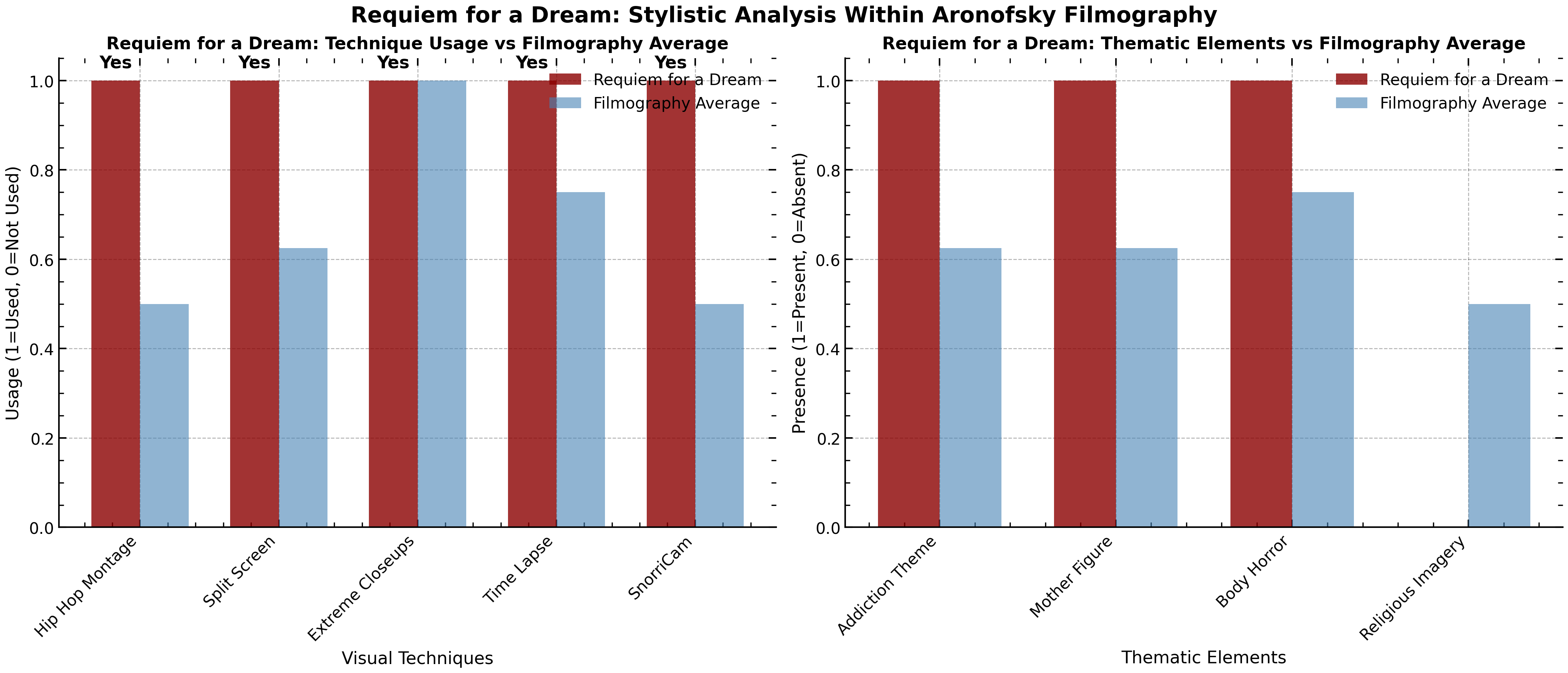
    fig Figure: “Requiem for a Dream” compared to Aronofsky’s other films in technique and theme density. The film is a peak example of his visual and psychological intensity.

  • Requiem for a Dream Rotten Tomatoes: Ratings, Reviews, and Enduring Impact

    Requiem for a Dream Rotten Tomatoes: Ratings, Reviews, and Enduring Impact

    Key Takeaways:

    • Requiem for a Dream holds a strong 78% Tomatometer and 93% Audience Score on Rotten Tomatoes, reflecting both critical respect and deep audience resonance.
    • The film’s raw portrayal of addiction, innovative style, and powerful performances—especially Ellen Burstyn’s—have made it a cult classic and a touchstone in psychological drama.
    • Rotten Tomatoes scores have played a significant role in the film’s legacy, introducing it to new generations and cementing its place in cinematic history.

    Introduction

    What makes a film both critically acclaimed and a cult favorite, decades after its release? Requiem for a Dream, Darren Aronofsky’s searing psychological drama, is one such movie. Since its debut in 2000, it has haunted audiences and critics alike with its unflinching depiction of addiction, despair, and the collapse of dreams. But how does this film fare on one of the internet’s most influential review platforms—Rotten Tomatoes?

    Rotten Tomatoes has become a gold standard for moviegoers, aggregating critic and audience reviews into easily digestible scores that can make or break a film’s reputation. In this post, we’ll dive deep into Requiem for a Dream Rotten Tomatoes ratings, explore what critics and audiences have said, and examine why this film remains so powerful and relevant today. Whether you’re a longtime fan or a newcomer, you’ll discover how the film’s Rotten Tomatoes profile reflects its enduring impact and why it’s still a must-watch for anyone interested in psychological drama.

    Overview of Requiem for a Dream

    Requiem for a Dream is a psychological drama set in Brooklyn and Coney Island, following four characters as they spiral into addiction and self-destruction. The film is based on the novel by Hubert Selby Jr. and is directed by Darren Aronofsky, known for his intense, stylized approach to storytelling.

    The main characters are:

    • Sara Goldfarb (Ellen Burstyn): An aging widow obsessed with appearing on television, who becomes addicted to amphetamines.
    • Harry Goldfarb (Jared Leto): Sara’s son, a heroin addict with dreams of a better life.
    • Marion Silver (Jennifer Connelly): Harry’s girlfriend, an aspiring fashion designer whose ambitions are derailed by addiction.
    • Tyrone C. Love (Marlon Wayans): Harry’s friend, who seeks escape from his troubled past but is also consumed by heroin.

    The film’s genre is psychological drama, but it’s also a tragedy—an intense, emotionally charged experience that doesn’t shy away from the darkest aspects of human nature. Aronofsky’s direction, Clint Mansell’s haunting score, and the cast’s raw performances have made Requiem for a Dream a landmark in modern cinema.

    Rotten Tomatoes Scores Breakdown

    When it comes to Requiem for a Dream Rotten Tomatoes scores, the numbers tell a compelling story:

    • Tomatometer (Critic Score): 78%
      This means that 78% of professional critics gave the film a positive review. The Tomatometer aggregates reviews from hundreds of critics, weighing both the number and quality of positive reviews .
    • Audience Score: 93%
      The Audience Score reflects the percentage of regular viewers who rated the film positively. This high score indicates that the film resonates deeply with general audiences, even more so than with critics.
    • Metacritic Score: 68/100
      Metacritic, another major aggregator, gives the film a weighted average based on critic reviews, reflecting generally favorable reviews.
    • IMDb Rating: 8.3/10
      IMDb’s user-driven score further confirms the film’s strong reputation among viewers.

    What Do These Scores Mean?

    The Tomatometer and Audience Score are two of the most influential metrics in the film world. The Tomatometer is based on professional critic reviews, while the Audience Score is based on user ratings. The gap between the two for Requiem for a Dream—with the audience rating much higher—suggests that the film’s emotional impact and storytelling resonate more with viewers than with some critics.

    Over time, the film’s reputation has only grown. While some critics initially found it too intense or stylized, audiences have embraced its raw honesty and innovative style, leading to its current status as a cult classic.

    Critical Reception Highlights

    Praise from Critics

    On Rotten Tomatoes and Metacritic, Requiem for a Dream has received widespread acclaim for its direction, acting, and cinematography. Ellen Burstyn’s performance as Sara Goldfarb is frequently singled out as a career-defining role, earning her an Oscar nomination and universal praise for her portrayal of addiction and mental decline.

    Notable critics have lauded the film:

    • Rolling Stone: Called it “a hypnotic, harrowing ride” and gave it a perfect score.
    • Philadelphia Inquirer: Praised the film’s “brilliant, disturbing” vision.
    • New York Post: Gave it an 88, highlighting the “unforgettable” performances and visual style.

    The film’s intensity, editing, and use of music (especially the now-iconic “Lux Aeterna” by Clint Mansell) are often cited as groundbreaking. Critics have described the film as “a fever dream of addiction” and “a relentless descent into hell.”

    Criticisms and Mixed Responses

    Not all critics were fully on board. Some found the film’s style overwhelming or its depiction of addiction too bleak. Reviews in the 63-70 range on Metacritic and Rotten Tomatoes mention that the film’s relentless intensity can be alienating, and that its stylized approach sometimes overshadows its emotional core.

    However, even mixed reviews often acknowledge the film’s technical brilliance and the power of its performances. The division among critics is part of what makes the film so memorable—it’s a movie that demands a reaction, whether positive or negative.

    Why the Film Divides Critics

    The film’s visual style—rapid cuts, split screens, and surreal imagery—can be polarizing. Some see it as a masterstroke, others as distracting. But this very divisiveness is what makes Requiem for a Dream unforgettable: it’s a film that refuses to play it safe, pushing boundaries in both form and content.

    Audience Reception and Cultural Impact

    Why Audiences Connect

    The 93% Audience Score on Rotten Tomatoes is a testament to the film’s deep emotional impact. Viewers praise the film for its realistic, unflinching portrayal of addiction and its consequences. Many fans highlight the sound design, editing, and acting as reasons why the film stays with them long after viewing.

    Fan reviews often mention:

    • The haunting score and how it amplifies the film’s emotional weight.
    • The raw, believable performances, especially from Ellen Burstyn and Jared Leto.
    • The film’s ability to evoke empathy and understanding for people struggling with addiction.

    Cultural Significance

    Requiem for a Dream is widely regarded as a landmark in the portrayal of drug addiction on screen. Its influence can be seen in later films and TV shows that tackle similar themes. The film’s style, music, and narrative have become part of pop culture, referenced in everything from memes to academic studies.

    Negative Audience Reviews

    While rare, some audience members find the film too disturbing or bleak, criticizing its lack of hope or redemption. However, even negative reviews often acknowledge the film’s artistry and the strength of its performances.

    How Requiem for a Dream’s Rotten Tomatoes Rating Affects Its Legacy

    Critical and Audience Acclaim

    The strong scores on Rotten Tomatoes have helped Requiem for a Dream maintain its reputation over the years. High ratings encourage new viewers to seek out the film, whether through streaming, rentals, or special screenings. The film’s presence on “best of” lists and its high audience score ensure that it remains a staple for fans of psychological drama.

    Role of Rotten Tomatoes

    Rotten Tomatoes has played a key role in introducing the film to new generations. As more viewers rely on the site for recommendations, the film’s high scores and positive reviews keep it relevant and accessible.

    Impact on Aronofsky’s Career

    The film’s critical and audience success helped establish Darren Aronofsky as a major director, paving the way for later hits like Black Swan and The Wrestler. Its influence can be seen in his subsequent work and in the broader landscape of psychological and addiction-themed cinema.

    Aronofsky’s Other Films

    • Black Swan: 85% Tomatometer, 84% Audience Score
    • The Wrestler: 98% Tomatometer, 88% Audience Score
    • Mother!: 68% Tomatometer, 51% Audience Score

    Compared to these, Requiem for a Dream sits in the middle for critics but stands out for its exceptionally high audience score, reflecting its cult status and emotional resonance.

    Other Drug-Themed Films

    • Trainspotting: 90% Tomatometer, 93% Audience Score
    • The Basketball Diaries: 46% Tomatometer, 80% Audience Score

    Requiem for a Dream is often compared to these films for its unflinching look at addiction, but its unique style and emotional intensity set it apart.

    Niche Appeal and Cult Classification

    The film’s ratings reflect its niche appeal: it’s not for everyone, but for those who connect with it, it’s unforgettable. Its cult status is reinforced by its high audience score and continued relevance in discussions about addiction and psychological drama.

    Conclusion

    Requiem for a Dream Rotten Tomatoes scores tell the story of a film that is both critically respected and deeply loved by audiences. Its 78% Tomatometer and 93% Audience Score reflect a movie that challenges, disturbs, and moves viewers in equal measure. Darren Aronofsky’s direction, the cast’s unforgettable performances, and the film’s innovative style have ensured its place as a modern classic.

    If you haven’t seen Requiem for a Dream, or if it’s been a while, now is the perfect time to experience (or revisit) this landmark film. And after watching, consider sharing your own review on Rotten Tomatoes—your voice is part of the film’s ongoing legacy.

  • Requiem for a Dream Synopsis: A Deep Dive into the Film’s Story, Themes, and Impact

    Requiem for a Dream Synopsis: A Deep Dive into the Film’s Story, Themes, and Impact

    Key Takeaways:

    • Requiem for a Dream is a critically acclaimed psychological drama directed by Darren Aronofsky, based on Hubert Selby Jr.’s novel.
    • The film follows four characters—Sara, Harry, Marion, and Tyrone—whose dreams are destroyed by addiction.
    • Its narrative is structured in three acts (Summer, Fall, Winter), mirroring the characters’ descent from hope to devastation.
    • The film’s innovative style, raw performances, and haunting score have made it a cultural milestone and a powerful cautionary tale about addiction.

    Introduction

    What makes a film unforgettable? For many, it’s the ability to evoke deep emotion, provoke thought, and linger in the mind long after the credits roll. Requiem for a Dream is one such film—a harrowing journey into the lives of four individuals whose dreams are slowly consumed by addiction. Directed by Darren Aronofsky and released in 2000, this psychological drama is based on Hubert Selby Jr.’s 1978 novel and is widely regarded as one of the most powerful explorations of addiction ever put to screen.

    In this comprehensive Requiem for a Dream synopsis, we’ll walk through the film’s major plot points, character arcs, and underlying themes. Whether you’re a longtime fan or a new viewer seeking to understand the film’s impact, this guide will help you appreciate the depth and artistry of Aronofsky’s vision. Understanding the synopsis is not only valuable for grasping the story but also for recognizing the film’s commentary on the human condition, the American Dream, and the devastating cycle of addiction.

    Background and Context

    Requiem for a Dream began as a novel by Hubert Selby Jr., a writer known for his unflinching depictions of urban despair and human vulnerability. The book’s raw, poetic style and focus on addiction’s destructive power made it a natural fit for director Darren Aronofsky, who was drawn to its emotional intensity and social critique .

    Aronofsky’s filmmaking approach is bold and immersive. He uses rapid editing, split screens, and a haunting score to pull viewers into the psychological states of his characters. The film’s visual and auditory style is as much a part of its storytelling as the script itself, creating a sensory experience that mirrors the highs and lows of addiction .

    Upon its release, Requiem for a Dream received critical acclaim for its innovative style and unflinching honesty. It quickly became a cult classic, influencing how addiction is portrayed in cinema and sparking conversations about mental health, societal pressures, and the pursuit of happiness .

    The story centers on four main characters:

    • Sara Goldfarb: A lonely widow obsessed with the idea of appearing on television.
    • Harry Goldfarb: Sara’s son, a heroin addict with dreams of a better life.
    • Marion Silver: Harry’s girlfriend, an aspiring fashion designer.
    • Tyrone C. Love: Harry’s best friend, who wants to escape his troubled past and make his mother proud.

    Each character begins with a dream, but as the film unfolds, those dreams are slowly eroded by addiction and desperation.

    Synopsis – Act 1: The Dream Begins

    The film opens in Brighton Beach, Brooklyn, where Sara Goldfarb (Ellen Burstyn) lives alone, her days filled with television and memories of happier times. Her life takes a turn when she receives a phone call inviting her to appear on a TV game show. Elated, Sara becomes fixated on fitting into her beloved red dress for the occasion. To lose weight, she visits a doctor who prescribes amphetamines—diet pills that soon become her crutch .

    Meanwhile, Sara’s son, Harry (Jared Leto), is caught in a cycle of addiction. Alongside his girlfriend Marion (Jennifer Connelly) and best friend Tyrone (Marlon Wayans), Harry dreams of a brighter future. Harry and Marion plan to open a clothing store, while Tyrone hopes to escape the ghetto and earn his mother’s respect. To fund their ambitions, the trio begins dealing heroin, believing that a few successful deals will set them on the path to their dreams .

    At first, things seem promising. Sara’s spirits lift as she loses weight, and she shares her excitement with her friends. Harry, Marion, and Tyrone enjoy the thrill of easy money and the illusion of control. The film’s “Summer” act is bathed in warm colors and hopeful music, reflecting the characters’ optimism and anticipation for a better life .

    But beneath the surface, cracks begin to show. Sara’s dependence on diet pills grows, and her friends worry about her health. Harry and Marion’s relationship, though loving, is built on mutual dependency and escapism. Tyrone, haunted by his past, struggles to stay focused on his goals. The seeds of tragedy are sown, even as the characters cling to their dreams.

    Synopsis – Act 2: The Spiral into Addiction

    As the seasons shift to Fall, the characters’ lives begin to unravel. Sara’s use of amphetamines escalates, leading to insomnia, paranoia, and vivid hallucinations. She becomes obsessed with the idea of appearing on television, watching infomercials and fantasizing about her moment in the spotlight. Her friends and neighbors notice her erratic behavior, but Sara is unable—or unwilling—to stop .

    For Harry, Marion, and Tyrone, the initial success of their drug-dealing venture is short-lived. Their own consumption increases, eating into their profits and straining their relationships. When Tyrone is arrested during a gang shootout, Harry and Marion are forced to use their savings to bail him out, leaving them desperate for money and drugs .

    The group’s heroin supply dries up as police crack down on dealers, and their desperation grows. Harry, feeling the weight of responsibility, asks Marion to prostitute herself for drug money. Marion, torn between her love for Harry and her need for heroin, reluctantly agrees. This marks a turning point in her character, as she becomes increasingly dependent on drugs and her relationship with Harry deteriorates .

    Sara’s mental state continues to decline. She increases her dosage of diet pills, leading to terrifying hallucinations—her refrigerator comes to life, and she imagines herself on television, adored by the audience. The red dress, once a symbol of hope, becomes a haunting reminder of her lost identity and the price of her obsession .

    With no other options, Harry and Tyrone decide to travel to Florida, hoping to buy heroin directly from the source. Marion, left behind, spirals further into addiction and despair. The film’s tone darkens, and the characters’ dreams slip further out of reach.

    Synopsis – Act 3: The Tragic Downfall

    Winter arrives, and with it, the catastrophic consequences of addiction. Each character faces the full weight of their choices, and the film’s narrative accelerates toward its devastating conclusion.

    Sara Goldfarb is found wandering the streets in a delusional state, convinced she will soon be on television. She is admitted to a psychiatric hospital, where doctors diagnose her with amphetamine-induced psychosis. Despite her pleas, she is subjected to electroconvulsive therapy, which leaves her physically and emotionally shattered .

    Harry Goldfarb and Tyrone C. Love’s journey to Florida is a disaster. Harry’s arm, infected from repeated heroin injections, becomes gangrenous. The two are arrested at a hospital, and Harry’s arm is amputated. Tyrone, suffering from withdrawal, is sent to a racially abusive southern prison, where he is forced into hard labor and endures brutal treatment .

    Marion Silver, alone and desperate, turns to prostitution to feed her addiction. In one of the film’s most harrowing scenes, she participates in a degrading sex party, her dignity and dreams utterly destroyed. The drugs she receives as payment offer only temporary relief from her pain .

    The film’s final scenes are a montage of isolation and despair. Sara lies in a hospital bed, unrecognizable and broken. Harry awakens in a prison infirmary, his arm gone and his future bleak. Tyrone curls up in his cell, haunted by memories of his mother. Marion, alone in her apartment, clutches a bag of heroin, her dreams of a better life lost forever .

    Each character curls into a fetal position, a visual metaphor for their regression and defeat. The film ends with a sense of hopelessness, underscoring the tragic cost of addiction and the fragility of dreams.

    Themes Highlighted Through the Synopsis

    Requiem for a Dream is more than a story about drugs—it’s a meditation on the human condition, the pursuit of happiness, and the dangers of illusion.

    Addiction and Destruction

    The film’s central theme is the destructive power of addiction. Whether it’s heroin, amphetamines, or the dream of fame, each character is consumed by their desires, leading to physical, emotional, and psychological ruin .

    The Illusion of the American Dream

    The characters’ initial hopes—Sara’s TV appearance, Harry and Marion’s business, Tyrone’s escape—reflect the allure of the American Dream. But the film exposes the dark side of this pursuit, showing how societal pressures and personal insecurities can drive people to self-destruction .

    Mental Health Struggles

    Sara’s descent into psychosis is a powerful depiction of mental illness, highlighting the dangers of untreated addiction and the failures of the healthcare system.

    The Cyclical Nature of Addiction

    The film’s structure, with its repetitive editing and seasonal acts, mirrors the cyclical nature of addiction—brief highs followed by inevitable lows, hope followed by despair .

    Symbolism of Dreams vs. Reality

    The contrast between the characters’ fantasies and their grim realities is a recurring motif. The red dress, the television, the business plans—all symbolize dreams that are ultimately unattainable.

    The Role of Environment and Social Circumstances

    Tyrone’s story, in particular, underscores the impact of environment and systemic barriers. His struggle to escape poverty and racial discrimination adds another layer to the film’s social commentary.

    Why the Synopsis Matters for Viewers

    Understanding the Requiem for a Dream synopsis enhances appreciation for the film’s artistry and emotional depth. Knowing the plot allows viewers to focus on the characters’ development, the symbolism woven throughout the narrative, and the innovative techniques Aronofsky employs to tell the story.

    The film’s structure—divided into acts that mirror the seasons—serves as a powerful narrative device, emphasizing the progression from hope to despair. Recognizing these elements enriches the viewing experience and deepens understanding of the film’s message.

    For those interested in the psychology of addiction, the synopsis serves as an educational tool, illustrating the devastating consequences of substance abuse and the importance of empathy and support for those affected.

    Conclusion

    The Requiem for a Dream synopsis is a journey through hope, addiction, and heartbreak. Darren Aronofsky’s film, adapted from Hubert Selby Jr.’s novel, is a masterclass in storytelling, blending innovative visuals, haunting music, and unforgettable performances to create a portrait of dreams lost to addiction.

    By following the intertwined stories of Sara, Harry, Marion, and Tyrone, the film exposes the fragility of human ambition and the destructive power of desire. Its impact endures, not only as a cautionary tale but as a work of art that challenges viewers to confront uncomfortable truths about society, mental health, and the pursuit of happiness.

    Whether you’re revisiting the film or discovering it for the first time, let this synopsis guide your understanding and appreciation of one of cinema’s most powerful dramas. Share your thoughts, reflect on the film’s message, and consider the real-world implications of the stories it tells. Requiem for a Dream is more than a movie—it’s a requiem for all the dreams that addiction can destroy.


  • Requiem for a Dream Explained: A Deep Dive into the Film’s Meaning, Symbolism, and Impact

    Requiem for a Dream Explained: A Deep Dive into the Film’s Meaning, Symbolism, and Impact


    Key Takeaways:

    • Requiem for a Dream is a harrowing exploration of addiction, dreams, and the human condition, using innovative visual storytelling and a haunting score to immerse viewers in its characters’ psychological descent.
    • The film’s title and structure serve as metaphors for the death of dreams, with each character’s arc representing a different facet of hope lost to addiction.
    • Through its narrative, visual motifs, and social commentary, the film remains a powerful cautionary tale and a landmark in modern cinema.

    I. Introduction

    What makes Requiem for a Dream one of the most unforgettable—and disturbing—films of the 21st century? Since its release in 2000, Darren Aronofsky’s psychological drama has left audiences shaken, critics divided, and film students endlessly analyzing its every frame. The movie’s relentless depiction of addiction, its innovative editing, and its haunting score have cemented its place as a modern classic.

    But what does it all mean? Why does the film’s ending haunt viewers long after the credits roll? In this comprehensive breakdown—requiem for a dream explained—we’ll unravel the film’s narrative, symbolism, and cultural impact. Whether you’re a first-time viewer or a longtime fan, this guide will help you understand the deeper layers of Aronofsky’s masterpiece and why it continues to resonate in today’s world.

    II. Quick Synopsis & Context

    Requiem for a Dream follows four interconnected characters in Brooklyn, New York, as they each chase their own version of the American Dream—only to be consumed by addiction and despair. The film is divided into three acts—Summer, Fall, and Winter—mirroring the characters’ descent from hope to devastation.

    • Harry Goldfarb (Jared Leto): A young man dreaming of a better life with his girlfriend, Marion, but trapped by heroin addiction.
    • Marion Silver (Jennifer Connelly): An aspiring fashion designer whose ambitions are derailed by drugs and dependency.
    • Sara Goldfarb (Ellen Burstyn): Harry’s mother, who becomes addicted to amphetamines in her quest to lose weight and appear on television.
    • Tyrone C. Love (Marlon Wayans): Harry’s best friend, who seeks escape from his troubled past but is ultimately undone by addiction.

    Directed by Darren Aronofsky and based on the novel by Hubert Selby Jr., the film was met with critical acclaim for its unflinching portrayal of addiction and its innovative visual style. Ellen Burstyn’s performance, in particular, was lauded, earning her an Academy Award nomination .

    III. Title Meaning and Central Metaphor

    What does “Requiem for a Dream” mean? The word “requiem” refers to a mass for the dead—a ceremony of mourning. In the context of the film, it’s a lament for the death of dreams. Each character clings to a hope—be it love, fame, or escape—but their aspirations are ultimately destroyed by addiction .

    The “dream” in the title is both literal and metaphorical. For Sara, it’s the fantasy of being on television and regaining her youth. For Harry and Marion, it’s the hope of building a life together. For Tyrone, it’s the longing for a better future. The film’s ending, with each character curled into a fetal position, is a funeral for these dreams—a requiem for the illusions that once gave their lives meaning .

    IV. Main Characters and Arcs

    Harry Goldfarb: Aspirations and Downfall

    Harry starts as a dreamer, hoping to escape his circumstances with Marion. His plan to make money through drug dealing is initially motivated by love and ambition, but heroin addiction quickly takes over. As his dependency grows, Harry’s relationships and health deteriorate, culminating in the amputation of his arm and the loss of everything he once valued .

    Marion Silver: Self-Worth and Harrowing Spiral

    Marion’s journey is one of lost self-worth. An aspiring designer, she becomes increasingly dependent on Harry and drugs. As their money runs out, she turns to prostitution to feed her addiction, sacrificing her dignity and dreams in the process.

    Sara Goldfarb: Obsession and Psychosis

    Sara’s arc is perhaps the most tragic. Isolated and lonely, she becomes obsessed with the idea of appearing on television. Her addiction to diet pills leads to amphetamine-induced psychosis, hallucinations, and ultimately, institutionalization .

    Tyrone C. Love: Escape and Tragic Path

    Tyrone dreams of escaping his past and finding success. Despite his efforts, he is caught in the cycle of addiction and systemic racism, ending up in prison and suffering withdrawal alone .

    Relationships and Motivations

    Each character’s “dream” shapes their actions and fate. Their relationships—romantic, familial, and platonic—are tested and ultimately destroyed by their inability to break free from addiction .

    V. Themes and Motifs

    Addiction in Many Forms

    While drugs are the most obvious addiction, the film explores other forms: Sara’s addiction to television and validation, Marion’s need for love, and Tyrone’s longing for escape. Each character seeks immediate gratification, only to find emptiness and pain .

    Escapism vs. Fulfillment

    The characters’ pursuit of quick fixes—be it drugs, fame, or love—contrasts with the reality that true fulfillment is elusive. Their attempts to escape pain only deepen their suffering .

    Isolation and Loneliness

    As addiction tightens its grip, each character becomes increasingly isolated. The film’s visual style—split screens, close-ups—emphasizes their separation from each other and the world .

    Societal Pressure and Expectations

    Sara’s obsession with weight loss and television reflects societal pressures to conform and be seen. The film critiques the media’s role in shaping self-worth and the destructive pursuit of unattainable ideals .

    Dreams vs. Reality

    The central tragedy is the gap between what the characters hope for and what they actually achieve. Their dreams are systematically dismantled, leaving only despair.

    Visual and Musical Motifs

    • Red Dress: Symbolizes Sara’s longing for youth and acceptance.
    • Refrigerator: Represents her growing paranoia and loss of control.
    • Seaside Amusement Park: A recurring image of hope and escape, ultimately unreachable .
    • Dock, TV, Pills: Objects that become symbols of each character’s obsession and downfall .

    VI. Narrative Structure and Visual Style

    Seasonal Structure

    The film is divided into three acts—Summer, Fall, Winter—mirroring the characters’ descent from hope to ruin. Each season marks a new stage in their decline .

    Editing and Cinematic Techniques

    Aronofsky’s use of rapid cuts, split screens, and montages mimics the rhythm of addiction—repetitive, compulsive, and ultimately destructive. The “hip-hop montage” style, with quick shots of drug preparation and use, immerses viewers in the characters’ experiences .

    Haunting Score

    Clint Mansell’s score, especially “Lux Aeterna,” is integral to the film’s emotional impact. The music’s relentless build mirrors the characters’ escalating desperation .

    Cinematography and Psychological Impact

    Camera angles, visual distortions, and color shifts reflect the characters’ psychological states—hopeful brightness gives way to cold, harsh tones as reality sets in.

    VII. Key Scenes Explained

    Sara and the TV: Obsession and Hallucination

    Sara’s fixation on television and her red dress symbolizes her desire for validation and lost youth. As her addiction worsens, the TV becomes a source of hallucination and terror, culminating in a nightmarish vision of herself on stage, mocked and alone .

    Harry and Marion: Rooftop Dreams vs. Brutal Realities

    Early scenes of Harry and Marion dreaming on the rooftop contrast sharply with their later reality. Their love, once a source of hope, is eroded by addiction, leading Marion to prostitution and Harry to physical ruin .

    Tyrone’s Flashbacks and Breakdown

    Tyrone’s memories of his mother and childhood highlight his longing for comfort and escape. His breakdown in prison, suffering withdrawal and isolation, underscores the film’s themes of loss and despair.

    The Shocking Ending Scenes

    In the film’s final moments, each character is shown in a fetal position, symbolizing regression, vulnerability, and the death of their dreams. Sara is institutionalized, Harry loses his arm, Marion clings to drugs, and Tyrone is alone in prison. The cyclical structure—ending where it began—emphasizes the inescapability of their fates .

    The Fetal Position: Meaning

    The fetal position at the end represents a return to innocence and safety, but also utter defeat. It’s a visual requiem—a mourning for the lives and dreams lost to addiction .

    VIII. Social Commentary and Psychological Realism

    Addiction in American Society

    The film is a scathing critique of how addiction permeates all levels of society, from the working class to the middle class, and how the pursuit of happiness can become self-destructive .

    Mental Health, Body Image, and Media Influence

    Sara’s storyline highlights the dangers of media-driven body image ideals and the neglect of mental health. The film exposes the societal pressures that drive individuals to dangerous extremes .

    A Warning, Not Just a Drama

    Requiem for a Dream is more than a story—it’s a warning about the consequences of chasing illusions and ignoring the realities of addiction .

    Psychological Realism

    The performances and script are grounded in psychological realism, making the characters’ suffering palpable and relatable. The film’s immersive style forces viewers to confront the emotional and physical toll of addiction .

    IX. Frequently Asked Questions: Requiem for a Dream Explained

    What is the main message of Requiem for a Dream?
    The film warns against the dangers of addiction—not just to substances, but to dreams, validation, and quick fixes. It shows how the relentless pursuit of happiness can lead to self-destruction .

    What does the ending mean?
    The ending, with each character in a fetal position, symbolizes the death of their dreams and a return to vulnerability. It’s a visual requiem—a mourning for what has been lost .

    What is the symbolism of Sara’s red dress and the refrigerator?
    The red dress represents Sara’s longing for youth and acceptance, while the refrigerator symbolizes her growing paranoia and loss of control as her mental state deteriorates .

    Is there any hope in the film’s conclusion?
    The film offers little hope—its message is intentionally bleak, serving as a cautionary tale about the consequences of unchecked desire and addiction.

    Why is the film considered so disturbing?
    Its unflinching portrayal of addiction, innovative visual style, and emotional intensity make it deeply unsettling. The film forces viewers to confront uncomfortable truths about human vulnerability and societal neglect.

    X. Legacy, Reception, and Cultural Impact

    Since its release, Requiem for a Dream has been hailed as a landmark in psychological drama and visual storytelling. Its innovative editing, haunting score, and raw performances have influenced countless filmmakers and sparked ongoing discussions about addiction and mental health .

    The film’s imagery and music have permeated popular culture, appearing in trailers, memes, and academic studies. Its lasting psychological resonance ensures that it remains a touchstone for anyone interested in the power of cinema to provoke, disturb, and enlighten .

    XI. Conclusion

    In the end, requiem for a dream explained is a story of hope turned to despair, of dreams consumed by addiction, and of the human cost of chasing illusions. Darren Aronofsky’s film remains a powerful warning about the dangers of escapism and the societal pressures that drive people to self-destruction.

    Its enduring relevance lies in its ability to make viewers feel—uncomfortable, empathetic, and, above all, aware. The lessons of Requiem for a Dream are as urgent today as they were at its release: to recognize the fragility of dreams, the perils of addiction, and the importance of compassion in a world that too often looks away.

  • An In-Depth Analysis of the Requiem for a Dream Dildo Scene: Impact, Controversy, and Cultural Significance

    An In-Depth Analysis of the Requiem for a Dream Dildo Scene: Impact, Controversy, and Cultural Significance

    Key Takeaways:

    • The requiem for a dream dildo scene is one of the most infamous and discussed moments in modern cinema, symbolizing the depths of addiction and loss of self.
    • Darren Aronofsky’s direction uses explicit content not for titillation, but to confront viewers with the brutal realities of desperation and exploitation.
    • The scene’s controversy has sparked debates about censorship, artistic boundaries, and the depiction of female sexuality and power dynamics in film.
    • Its legacy endures as a touchstone for discussions about the role of graphic content in storytelling and the psychological impact of addiction.

    Introduction

    What makes a film scene so powerful that it becomes a cultural touchstone, debated and dissected for decades? The requiem for a dream dildo scene is one such moment—a sequence that has haunted, shocked, and challenged audiences since Darren Aronofsky’s Requiem for a Dream premiered in 2000. This scene, often referred to by the phrase “ass to ass,” is infamous not just for its graphic content, but for its unflinching portrayal of the depths to which addiction can drive a person.

    In the world of cinema studies and pop culture, exploring controversial scenes like this is essential. They force us to confront uncomfortable truths, question the boundaries of artistic expression, and reflect on the power of film to evoke empathy, revulsion, and understanding. In this comprehensive analysis, we’ll break down the requiem for a dream dildo scene: its context within the film, a detailed description, interpretations and symbolism, public and critical reception, and its broader cultural significance.

    Whether you’re a film buff, a student, or simply curious about why this scene remains so talked about, this post will provide a thoughtful, data-driven, and respectful exploration of one of cinema’s most challenging moments.

    1. Background: Overview of Requiem for a Dream

    Requiem for a Dream is a psychological drama directed by Darren Aronofsky, adapted from the novel by Hubert Selby Jr. The film follows four characters—Sara Goldfarb, her son Harry, his girlfriend Marion Silver, and his friend Tyrone—as they spiral into addiction and despair. The narrative is divided into three acts (Summer, Fall, Winter), each marking a deeper descent into psychological and physical ruin.

    The requiem for a dream dildo scene centers on Marion Silver, played by Jennifer Connelly. Marion begins the film as a hopeful, ambitious young woman with dreams of opening a fashion boutique. As her addiction to heroin intensifies, her relationship with Harry deteriorates, and her desperation for drugs leads her down a path of exploitation and self-destruction.

    Aronofsky’s reputation for raw, graphic content is on full display in this film. His directorial style—marked by rapid editing, extreme close-ups, and a relentless focus on the characters’ psychological states—serves to immerse viewers in the chaos and pain of addiction . The film’s controversial scenes, including the dildo sequence, are not gratuitous; they are integral to the narrative’s exploration of the human cost of addiction .

    2. Detailed Description of the Dildo Scene

    The requiem for a dream dildo scene occurs near the film’s climax, in the “Winter” segment, as Marion’s life unravels completely. Desperate for heroin and unable to obtain it through her usual means, Marion is directed to a party hosted by a drug dealer named Big Tim. The party is a gathering of men seeking sexual entertainment in exchange for drugs.

    Scene Setting and Mood:
    The atmosphere is dark, chaotic, and charged with a sense of menace. Marion, visibly anxious and emotionally numb, is joined by another woman. The two are presented with a double-ended dildo and are instructed to perform a sexual act—referred to by the crowd as “ass to ass”—for the entertainment of the onlookers.

    What Happens in the Scene:
    The camera work is fragmented and disorienting, using close-ups and rapid cuts to convey Marion’s psychological detachment. The crowd’s jeers and the pounding music create a sense of claustrophobia and humiliation. The act itself is depicted with a mix of explicitness and suggestion: the women are shown using the double-ended dildo between them, with the camera focusing on their faces, the object, and the reactions of the crowd.

    Filming Techniques and Body Double Use:
    To maintain a degree of respect for the actors, a body double was used for some of the most explicit shots involving Jennifer Connelly’s character . Aronofsky’s direction balances realism with restraint, using lighting, camera angles, and editing to convey the scene’s brutality without resorting to pornographic detail.

    Censored vs. Uncensored Versions:
    There are notable differences between the censored and uncensored versions of the scene. In some edits, shots are shortened or altered to reduce the explicitness, particularly regarding the use of lubrication and the visibility of the act . These changes reflect ongoing debates about what is acceptable in mainstream cinema and the impact of such scenes on audiences.

    3. Interpretations and Analysis of the Scene

    Symbolism and Thematic Weight

    The requiem for a dream dildo scene is not simply about shock value. It is a powerful symbol of the degrading and destructive nature of addiction. Marion’s participation in the act is not motivated by desire or agency, but by desperation for drugs. The scene visually and emotionally represents the loss of self, dignity, and autonomy that addiction can cause .

    Psychological Impact on Characters

    For Marion, the scene marks the nadir of her transformation—from a hopeful, creative woman to someone willing to endure humiliation and exploitation for a fix. Her emotional detachment, blank expression, and subsequent “happiness” at receiving drugs as payment underscore the psychological toll of her addiction.

    Film Technique Analysis

    Aronofsky’s use of camera work, editing, and sound is crucial in amplifying the discomfort and emotional weight of the scene. The rapid cuts, close-ups, and cacophony of sound immerse the viewer in Marion’s disorientation and trauma. The fragmented visuals mirror her fractured sense of self, while the crowd’s chants and the pounding music create a sense of inescapable pressure .

    Viewer Reactions

    Many viewers find the scene deeply disturbing, not because of its explicitness alone, but because of the emotional devastation it represents. Online forums and reviews frequently cite the dildo scene as one of the most harrowing moments in modern cinema, with some describing it as “the most disturbing scene I’ve ever watched” .

    Analytic vs. Vaginal Penetration Debate

    There is ongoing debate in fan forums and critical discussions about the specifics of the act depicted—whether it is anal or vaginal penetration, and how this affects interpretations of the scene’s “degrading” or “disturbing” nature . Regardless of the technical details, the consensus is that the scene’s power lies in its portrayal of exploitation and the erasure of agency.

    Intimacy and Violence as Metaphor

    The juxtaposition of sexual intimacy and violence in the scene serves as a metaphor for addiction’s corrosive effect. What should be an act of connection is transformed into a spectacle of degradation, mirroring the way addiction twists and destroys the most personal aspects of a person’s life.

    4. Controversy and Public Reception

    Initial Critical and Public Reception

    Upon release, the requiem for a dream dildo scene generated immediate controversy. Critics and audiences were divided—some praised Aronofsky’s unflinching honesty, while others questioned whether the scene went too far . The film’s NC-17 rating in the United States was largely due to this sequence, limiting its distribution and sparking debates about censorship .

    Censorship Debates

    Different versions of the film exist, with some edits reducing the explicitness of the scene to secure an R rating for wider release. These changes often involved shortening shots, altering camera angles, or removing certain visual details . The debates around censorship highlight the tension between artistic expression and societal standards for acceptable content.

    Cultural Taboos and Boundary-Pushing

    The dildo scene pushed the boundaries of what was considered acceptable in mainstream cinema. Its explicitness, combined with its emotional intensity, challenged cultural taboos around sex, exploitation, and the depiction of female sexuality. Aronofsky’s willingness to confront these taboos head-on has been both lauded and criticized .

    Online and Social Media Discourse

    In the years since the film’s release, the scene has become a frequent topic of discussion on social media, film forums, and review sites. Viewers express a range of reactions—shock, fascination, empathy, and critique. Some see the scene as a necessary depiction of addiction’s horrors, while others view it as gratuitous or exploitative .

    Realism and Impact

    The realism of the scene is a major point of contention. Some praise the film for refusing to sanitize the realities of addiction, while others argue that the explicitness risks overshadowing the film’s message. The use of a body double and careful editing reflect the filmmakers’ attempts to balance authenticity with sensitivity .

    5. Broader Cultural and Cinematic Context

    Comparison with Other Controversial Scenes

    The requiem for a dream dildo scene is often compared to other controversial moments in cinema, such as the rape scene in Irreversible or the explicit content in Blue is the Warmest Color. What sets it apart is its integration into a narrative about addiction, where sexual exploitation is a consequence of desperation rather than desire .

    Influence on Filmmakers and Portrayal of Sexual Content

    The scene has influenced subsequent filmmakers to approach raw, unfiltered sexual content with greater narrative purpose. It demonstrated that explicit scenes can serve as powerful storytelling tools when used to illuminate character and theme, rather than for mere shock value.

    Female Sexuality, Exploitation, and Power Dynamics

    The dildo scene has sparked important discussions about the depiction of female sexuality and exploitation in film. Some critics argue that it exposes the vulnerability and objectification of women in a patriarchal society, while others worry about the potential for re-traumatization or voyeurism .

    Aronofsky’s Directorial Choices and Recurring Themes

    Darren Aronofsky’s directorial style is marked by a willingness to explore human fragility, self-destruction, and the limits of endurance . The dildo scene is a culmination of these themes, using explicit content to force viewers to confront the darkest aspects of the human experience.

    Lasting Legacy

    The requiem for a dream dildo scene remains a reference point in discussions about the role of graphic content in cinema. Its legacy is evident in the way it continues to provoke debate, inspire analysis, and challenge audiences to engage with difficult subject matter .

    6. Conclusion and Reflection

    The requiem for a dream dildo scene is more than just a moment of shock or controversy—it is a pivotal narrative device that encapsulates the film’s exploration of addiction, desperation, and the loss of self. Through Aronofsky’s unflinching direction, the scene forces viewers to confront the realities of exploitation and the psychological toll of substance abuse.

    Balancing artistic expression with viewer sensitivity is a perennial challenge in cinema. The dildo scene’s enduring impact lies in its ability to provoke thought, empathy, and discussion about the boundaries of storytelling and the responsibilities of filmmakers. It remains a potent talking point not because of its explicitness alone, but because of the emotional and symbolic weight it carries.

    As viewers and critics, it is important to engage with challenging film content thoughtfully, recognizing the difference between gratuitous shock and meaningful narrative. The requiem for a dream dildo scene stands as a testament to the power of cinema to illuminate the darkest corners of the human experience—and to spark conversations that matter.

    FAQs

    What is the requiem for a dream dildo scene about?
    It is a climactic moment in the film where Marion Silver, desperate for drugs, participates in a sexually explicit act involving a double-ended dildo at a party, symbolizing her complete loss of agency and the depths of her addiction .

    Why is the scene so disturbing to viewers?
    The scene is disturbing not just for its explicitness, but for its portrayal of exploitation, humiliation, and the psychological devastation of addiction. It forces viewers to confront the realities of desperation and loss of self .

    Was Jennifer Connelly involved in filming the scene?
    Jennifer Connelly performed much of the scene, but a body double was used for the most explicit shots to maintain a degree of respect and privacy for the actress .

    How did the film handle censorship of explicit scenes?
    Different versions of the film exist, with some edits reducing the explicitness of the scene to secure a lower rating. These changes often involved shortening shots or altering camera angles .